
What's on this page
- How much is a rear-end collision settlement worth?
- Fault in a rear-end collision, and its exceptions
- Average settlement for a rear-end accident: why the number misleads
- The two halves: economic and non-economic damages
- Economic damages: the part you can add up
- Whiplash and soft-tissue: the signature rear-end injury
- Non-economic damages: the part with no invoice
- The multiplier method, illustrated
- Illustrative ranges by injury severity
- Rear-end collision with injury: illustrative value
- Rear-end collision settlement with no injury
- The comparative-fault exception: sudden stops and brake-checking
- What raises a rear-end claim’s value
- What lowers a rear-end claim’s value
- Documentation: the police report, photos, and records
- What a rear-end settlement is built from
- How long a rear-end collision settlement takes
- Insurance-company tactics on rear-end claims
- When to get a lawyer
- A worked illustrative example
- The bottom line
Short answer: A rear-end collision settlement is worth whatever the injury, the documentation, and the available insurance coverage support. Illustratively that runs from a few thousand dollars for a property-only bump to well into six figures for a serious, lasting injury. Liability in a rear-end crash is usually clear, but the injury, not the fault, sets the number. Every figure is illustrative, so consult a licensed attorney in your state to value your own claim.
A rear-end collision settlement is worth whatever the specific injury, documentation, and available coverage support, which is why honest illustrative ranges run from a few thousand dollars for a property-only bump to well into six figures for a serious, lasting injury. Liability is usually clear; the injury decides the number.
That short answer hides the more useful story, which is why the range is so wide and where inside it a given claim tends to land. Rear-end crashes are the most common collision type on the road, and they have a distinctive shape: fault is usually easy to establish, the injuries cluster around the neck and back, and the value swings on how serious and how lasting the injury turns out to be. This explainer walks through the honest answer, why the rear driver is usually at fault and why that helps a claim, whiplash and soft-tissue injury as the signature rear-end harm, the value factors, the multiplier math (illustratively and heavily caveated), the property-only and no-injury case, the comparative-fault exception for sudden stops and brake-checking, documentation, the timeline, insurance tactics, and a worked example. For the general valuation framework this article builds on, see our car accident settlement explainer, and you can run your own illustrative figures through the settlement range estimator as you read.
Key takeaways
- There is no meaningful "average" rear-end collision settlement: illustrative outcomes run from a few thousand dollars for a property-only bump to six figures for a serious injury, and averaging them describes nothing real.
- Liability is usually clear because the following-distance rule presumes the rear driver at fault, which removes one big discount from the claim, but clear fault does not set the amount.
- Whiplash and other soft-tissue injuries are the signature rear-end harm, and their value depends heavily on documentation because they rarely show on a scan.
- Value is built from documented economic damages plus an estimate of non-economic damages, commonly reached with a severity multiplier in an illustrative 1.5 to 5 range.
- The comparative-fault exceptions (a sudden reverse, an abrupt stop, brake-checking, dead brake lights) can shift some blame onto the lead driver and discount the recovery.
How much is a rear-end collision settlement worth?
The honest answer is that it depends, and the thing it depends on most is the injury, not the crash. This frustrates people who want a single figure, but the frustration points at the truth: a rear-end collision that leaves a sore neck healed in a month and one that ruptures a disc and ends a career are both “rear-end collision settlements,” and no single number fits both. Illustratively, the spread runs from a few thousand dollars where the only loss is a dented bumper to well into six figures where the injury is serious and permanent.
What makes rear-end claims a little more predictable than crashes generally is the liability picture. In most other collision types, fault is contested, and a disputed-fault discount hides inside every offer. In a typical rear-end crash, fault sits plainly with the driver behind, so that particular discount often falls away. That is a real advantage, and it is covered in the next section. But it is an advantage on the liability side of the claim, not the value side. Once fault is settled, the number still comes down to the same machinery every injury claim uses: documented economic damages plus an estimate of non-economic damages. Our car accident settlement worth explainer takes that machinery apart in full; here the point is that a clear-fault rear-end crash removes one obstacle to value without deciding what the value is.
So the useful move is to stop hunting for an average and learn where your claim sits on the ladder. The rest of this explainer builds that ladder, tier by tier, starting with the fact that makes rear-end claims distinctive: who is presumed to be at fault.
Fault in a rear-end collision, and its exceptions
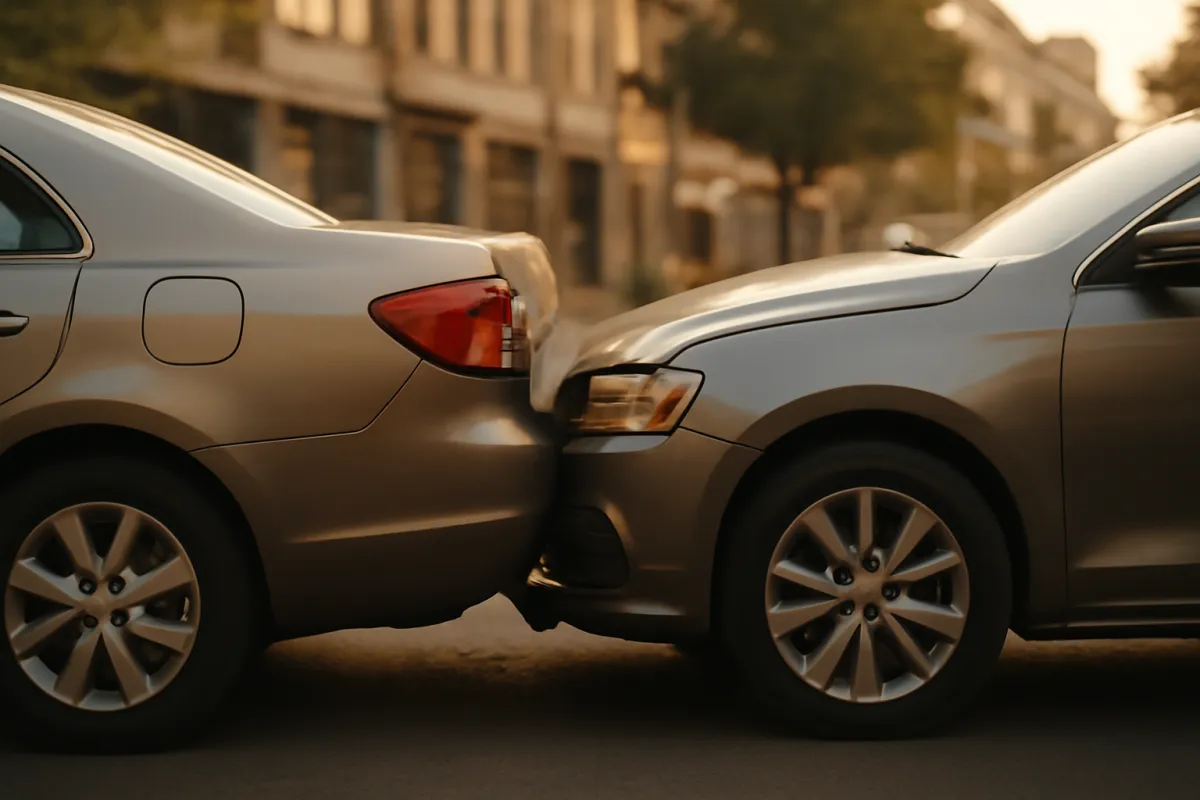
In the large majority of rear-end collisions, the driver who did the hitting is found at fault. The reason is a rule of the road that applies almost everywhere: a driver must keep a safe following distance, enough to stop for whatever the car ahead reasonably does, including stopping short. If you drive into the back of another car, the starting presumption is that you were following too closely or not paying enough attention to stop in time. That presumption is why insurers so often accept liability on rear-end claims quickly, sometimes without much argument at all.
For the injured person in the front car, this is genuinely good news, and it is worth understanding why. A claim’s value can be attacked from two directions: the insurer can argue the injury is not as bad as claimed, and it can argue the crash was partly or wholly the claimant’s own fault. Clear liability shuts down the second line of attack. When fault is not in dispute, there is no comparative-fault discount eating into the offer, and the whole negotiation narrows to the size of the harm. That is a stronger negotiating position than most other accident types start from.
The presumption is strong, but it is not a guarantee, and the exceptions matter enough to get their own section below. A lead driver who reversed into the car behind, stopped abruptly for no reason, drove with broken brake lights, or brake-checked on purpose can absorb some of the blame. Where that happens, the advantage of clear liability shrinks, and in comparative-fault states the recovery shrinks with it.
Average settlement for a rear-end accident: why the number misleads
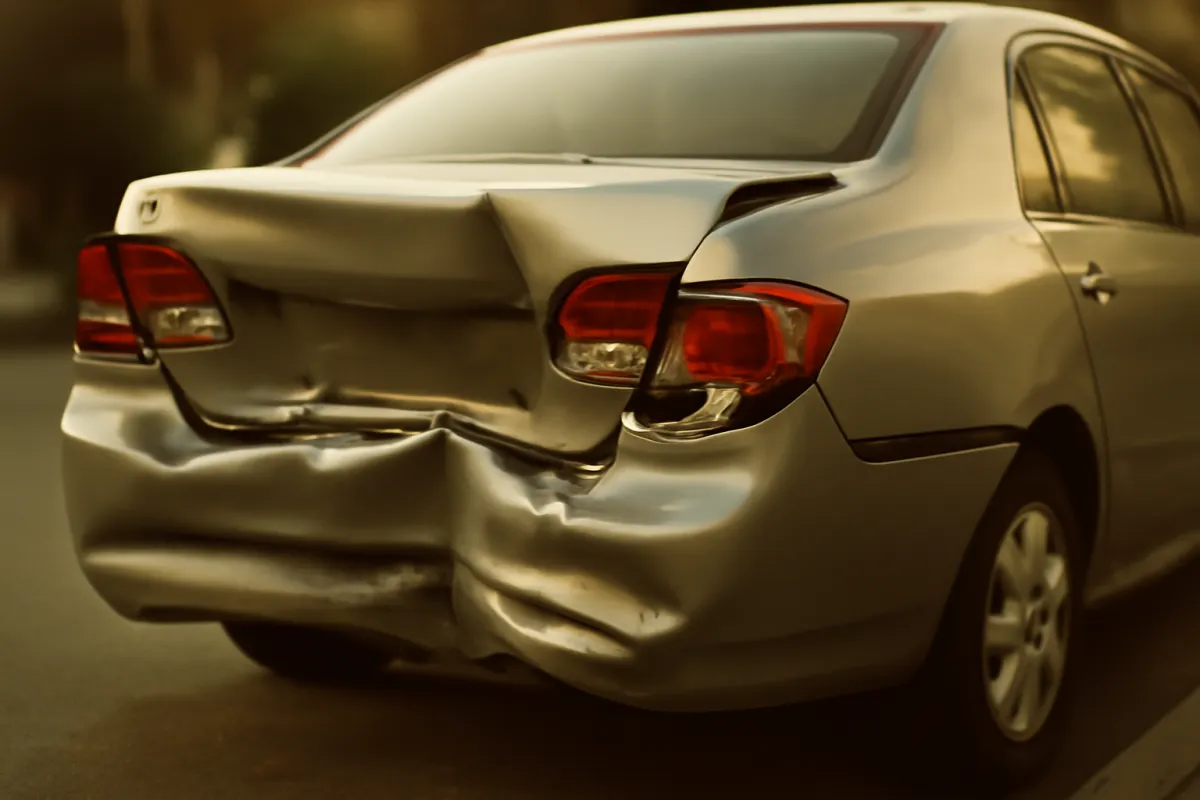
Search for the average settlement for a rear-end accident and you will find confident dollar figures presented as fact. Ignore them, for the same reason an average of any wildly spread set of numbers is useless. Rear-end settlements do not cluster around a middle. They stretch across three or four orders of magnitude, from a few hundred dollars for a cosmetic bumper repair to seven figures in the rare catastrophic case. An average folds a property-only fender-bender and a career-ending disc injury into one figure that fits neither.
The spread is not measurement noise to be smoothed away. It is the most important fact about rear-end settlement value, and it exists because the harm a rear-end crash does to a specific life genuinely varies that much. Two people with the same whiplash diagnosis on paper can settle for very different amounts depending on how the injury affected their work, how well the treatment was documented, and how much coverage exists to pay. A quoted average is a guess dressed as data, and it tends to make people either over-expect or under-value their own claim, both of which cost money at the negotiating table.
What is worth learning instead is the structure. Every rear-end settlement, from the smallest to the largest, is assembled from the same categories and estimated with the same handful of methods. Learn the structure and you can judge whether a given offer is reasonable, which is far more useful than any average could be. That structure starts by splitting the claim in two.
The two halves: economic and non-economic damages
Every rear-end injury claim is made of two kinds of damages, and keeping them apart is the key to understanding the number.
The first half is economic damages, sometimes called special damages. These are the concrete financial losses the crash caused, the ones with a receipt or a statement behind them: medical bills, lost income, future care, and vehicle or property damage. They can be added up, and they form the documented, hard-to-dispute core of the claim.
The second half is non-economic damages, sometimes called general damages. These compensate for harms with no invoice: physical pain, the disruption to daily life, the loss of activities the injury took away, and the emotional strain. They are real, and in a serious claim they are often the larger half, but they have to be estimated rather than tallied, because there is no bill for a month of a stiff, aching neck.
Almost everything about what a rear-end settlement is worth comes down to how these two halves are calculated and combined. The economic half anchors the claim in documented fact. The non-economic half is where judgment, evidence, and negotiation do their work, and it is where the biggest swings in value live. Run your own split through the settlement range estimator to see how the two halves move together.
Economic damages: the part you can add up
Economic damages are the foundation, because a well-documented economic loss is the part no one can seriously argue away. For a rear-end crash they usually include a few components.
Medical expenses are typically the most important, running from any emergency visit through imaging, physical therapy, chiropractic care, medication, injections, and follow-up. They matter twice: once as a cost to be repaid, and again because they often anchor the estimate of pain and suffering under the multiplier method below.
Lost income covers the wages you did not earn while unable to work, including time off for treatment. For a serious injury it extends to lost earning capacity, the reduction in future earnings if the injury limits your work permanently, which can dwarf every other component.
Future medical care accounts for treatment you will still need after the claim resolves: ongoing therapy, a future procedure, or long-term pain management. This is exactly why settling too early is dangerous, since future costs only come into focus once recovery has taken shape.
Vehicle and property damage covers repairing or replacing the car and anything in it that was harmed, plus related costs like a rental. On many rear-end claims this piece is handled separately and early, but it is still part of the economic picture, and in a no-injury case it is the whole claim.
The lesson of the economic half is blunt: document relentlessly. Every bill, receipt, pay stub, and repair estimate is a brick in the foundation, and a gap in the paperwork is a gap the other side will use to argue the number down.
Whiplash and soft-tissue: the signature rear-end injury
If one injury defines rear-end crashes, it is whiplash. The physics are specific to the impact: a car struck from behind lurches forward, and the occupant’s head snaps back and then forward, straining the muscles, ligaments, and soft tissue of the neck. Related soft-tissue injuries to the upper back and shoulders come from the same motion. These are by far the most common rear-end injuries, and they have a valuation problem baked in.
The problem is that soft-tissue injuries usually do not show on an X-ray or an MRI. A broken bone is visible; a strained ligament frequently is not. That gives insurers room to argue the injury is exaggerated or unrelated, which is why whiplash claims live or die on documentation rather than imaging. Consistent medical records, a treatment history that matches the reported pain, and no unexplained gaps in care are what move a whiplash claim’s value, far more than anything the claimant can say. Our whiplash settlement explainer works through the valuation of this specific injury in depth, and our explainer on how long a whiplash claim takes covers why the treatment timeline sets the clock.
One feature of whiplash catches people out: it often does not hurt right away. Symptoms commonly surface a day or two after the crash, once the adrenaline fades, which means someone who felt fine at the scene can wake up with a genuinely injured neck. That delay is one reason prompt medical attention matters even after a low-speed crash, both for the recovery and for the record. A same-day or next-day visit ties the injury to the collision in a way a two-week gap never will.

Non-economic damages: the part with no invoice
Here is where valuation gets genuinely hard, because pain and the disruption to daily life are real but carry no receipt. The law recognizes that a strained, aching neck that keeps you from sleeping, working comfortably, or lifting your child is a loss even when it never appears on a statement, so it allows compensation for it. The challenge is turning something inherently unquantifiable into a number two sides can negotiate over.
Non-economic damages cover physical pain, the emotional toll of the crash, the loss of activities the injury took away, and the strain on daily function. In a minor rear-end claim this half is modest. In a serious one it is frequently the largest single piece, because the enduring human cost of a lasting injury outweighs even substantial medical bills. On a whiplash claim specifically, this is the half the insurer will fight hardest to shrink, precisely because it cannot be pinned to an invoice.
Because there is no bill, negotiators reach for a convention to produce a defensible starting figure. The most common by far is the multiplier method, and understanding it explains most of how the largest part of a serious rear-end claim gets estimated.
The multiplier method, illustrated
The multiplier method estimates non-economic damages by taking the economic damages, principally the medical bills, and multiplying by a number that reflects how serious the injury was. The logic is that worse injuries generate both higher medical costs and greater suffering, so the medical total serves as a rough proxy for severity.
Here is the arithmetic, with numbers invented purely to show the shape. Suppose the documented economic damages for a rear-end injury come to eight thousand dollars. At a low multiplier for a minor whiplash with a full recovery, illustratively 1.5, the method suggests a gross figure around twelve thousand dollars. Raise the multiplier to 3 for a more serious, longer-lasting injury and the same eight thousand points toward a gross near twenty-four thousand. Push it to 5 for a severe or permanent injury and the figure moves toward forty thousand. The economic base did not change; the severity did, and the multiplier is where severity enters the math.
Two cautions keep this honest. First, the multiplier is not a law or a lookup table. It is a negotiating convention, and the injured side argues for a higher one on the strength of the injury’s severity and lasting effects while the insurer argues for a lower one. Where it lands depends on evidence, not on any rule. Second, on soft-tissue rear-end injuries the same medical bill can support very different multipliers depending on how thoroughly the human cost is documented. A well-supported claim of lasting neck pain moves the multiplier in a way an undocumented one never will. Run the method on your own figures in the settlement range estimator, but treat the output as illustrative machinery, not a valuation.
Illustrative ranges by injury severity
With the method in hand, it is possible to sketch rough ranges by severity tier, on one firm condition: these are illustrative reference points, not predictions, and no real rear-end claim is obligated to land anywhere near them. Their whole purpose is to show the scale of the spread, which is the single most important thing to understand about settlement value.
Illustrative rear-end settlement range by severity
Rough high-end reference figures per tier, on one shared scale. Illustrative only, not a prediction for any claim.
Bar widths are each tier's illustrative high-end figure as a share of the serious reference ($500k). The property-only bar is barely visible on purpose: that gulf between a sliver and a full bar is exactly why a single "average" rear-end settlement figure is meaningless. Real claims vary enormously, in both directions.
The chart makes the argument better than any sentence can. A no-injury claim is a thin sliver against a serious one, and every tier between them differs from its neighbors by a wide margin. Where your rear-end claim sits on this ladder matters more than any other single fact, so the next sections walk the two ends people ask about most: the with-injury case and the no-injury case.
Rear-end collision with injury: illustrative value
Once there is a genuine injury, the value climbs off the property-only floor and starts to track the severity ladder. Illustratively, a soft-tissue whiplash that heals cleanly in a few weeks sits in the low-to-mid five figures; a moderate injury needing months of therapy, imaging, or a minor procedure can reach the mid five or low six figures; and a serious injury with lasting effects climbs from there. The jump between those tiers is large, which is the recurring theme of this whole subject.
What separates a rear-end claim’s low outcome from its high one, within the same injury type, is usually documentation and permanence. A whiplash that leaves a lingering limitation, even a partial one, supports a materially higher figure than the same whiplash with a clean recovery, because a lasting effect pulls the multiplier up. This is the tier where careful medical records and an honest account of how the injury changed daily life do the most to move value. It is also where the clarity of a rear-end crash’s liability pays off, because with fault not in dispute, the entire negotiation is about the size of the injury rather than who caused it.
One ceiling is worth naming here. A rear-end injury claim generally cannot collect more than the at-fault driver’s insurance coverage, whatever its underlying worth, unless the claimant carries their own underinsured-motorist coverage to reach into. A serious injury caused by a minimally insured driver can be worth far more on paper than can actually be collected, which is one of the most important and least understood limits on value.
Rear-end collision settlement with no injury
When no one is hurt, a rear-end claim changes character entirely. There is no pain-and-suffering half to estimate, so the settlement is really a property-damage matter: the cost to repair or replace the vehicle, plus related out-of-pocket losses like a rental car or a diminished-value claim where the law allows it. Illustratively that runs from a few hundred dollars for a scuffed bumper to several thousand for real structural damage, with no multiplier applied because there is no injury to multiply.
This is why a no-injury rear-end settlement is usually far smaller than an injury claim, and why it typically resolves faster: property damage is easy to document with an estimate and photos, and insurers process it quickly. If that is genuinely all that happened, a clean, well-documented property claim is often something people handle directly with the insurer.
The one caution is the whiplash timing problem from earlier. Because soft-tissue injuries frequently surface a day or two after the crash, “no injury” at the scene sometimes turns into a real injury by the next morning. Anyone who signs a release on a property-only basis gives up the right to claim for an injury that later appears, so the sensible move after any rear-end crash is to watch for symptoms for a few days, see a professional promptly if anything develops, and avoid signing away an injury claim before you know whether you have one.
The comparative-fault exception: sudden stops and brake-checking
The following-distance rule presumes the rear driver at fault, but a presumption can be rebutted, and the exceptions are where rear-end liability gets interesting. A lead driver who did something unreasonable can pick up a share of the blame. The common scenarios: reversing into the car behind, stopping abruptly with no reason a following driver could anticipate, changing lanes and braking immediately, driving with broken or non-functioning brake lights, or brake-checking on purpose to provoke a collision.
Where the lead driver carries some fault, the effect on the settlement depends on the state’s rule. In a comparative-fault state, each driver’s recovery is reduced by their share of blame, so a lead driver found twenty percent at fault sees their recovery cut by twenty percent. In a pure comparative-fault state a claimant can recover even when mostly at fault, minus their share; in a modified comparative-fault state, crossing a threshold (commonly fifty or fifty-one percent) bars recovery entirely; and in the few contributory-negligence jurisdictions, any fault at all can defeat the claim. This is one of the places where the outcome hinges entirely on state law, so it is worth stressing that only a licensed attorney in your state can tell you how the rule applies.
Proving an exception takes evidence, not assertion. Dashcam footage, independent witnesses, the pattern of vehicle damage, and even the timing in a police report are what turn a rear driver’s “they stopped short” into a defensible fault argument. Absent that evidence, the presumption usually holds, which is why the rear driver is still at fault in most cases.
What raises a rear-end claim’s value
Certain facts push a rear-end settlement figure up, and knowing them tells you where the effort of building a claim actually pays. None guarantees an amount; each strengthens the number the evidence can support.
- Clear liability. This is the rear-end claim’s built-in advantage. With fault presumed against the driver behind, there is usually no comparative-fault discount hiding in the offer, so the whole negotiation is about the injury.
- Prompt, consistent medical care. A same-day or next-day visit ties the injury to the crash, and a treatment history with no gaps supports a higher multiplier. On soft-tissue injuries this does more than anything else to move value.
- Objective findings where they exist. Imaging that confirms a disc injury, or a documented neurological finding, lifts a claim above the “unprovable soft-tissue” argument insurers lean on.
- Real lost wages and earning capacity. Wage records showing concrete lost income, and in serious claims a credible account of reduced future earning capacity, add directly to the economic base.
- Permanence. A lasting impairment, even a partial one, is the single factor most likely to move a rear-end claim into a higher tier, because it compounds both future medical costs and non-economic damages.
- Adequate insurance coverage. Value only matters if it can be collected. A claim against a well-insured party, or one backed by the claimant’s own underinsured-motorist coverage, has room to reach its worth that a claim against a minimal policy does not.
What lowers a rear-end claim’s value
The same logic runs in reverse. A handful of facts quietly cut rear-end settlement value, and each is a discount the other side will argue for whether or not it is fully earned.
- The low-impact defense. Insurers routinely argue that a minor-looking bumper impact could not have caused a real injury, using the modest vehicle damage to attack the injury claim. It is a favorite tactic on rear-end cases specifically, and it is met with medical evidence, not with argument about the dent.
- Gaps in treatment. A delay in seeking care, or long unexplained gaps between visits, hands the insurer an argument that the injury was minor or unrelated. The record does not have to be true to be damaging; it only has to be arguable.
- Pre-existing conditions. A prior neck or back problem invites the argument that some or all of the current pain is not the crash’s fault. This is contestable, since aggravating a pre-existing condition is generally compensable, but it is a reliable source of downward pressure, and it must be met with clear before-and-after evidence.
- A comparative-fault share. If the lead driver’s own conduct (a sudden stop, dead brake lights) attracts some blame, the recovery drops by that share in comparative-fault states.
- Thin documentation. A soft-tissue claim with sparse records is a claim priced for a low multiplier, because the human cost cannot be shown and therefore cannot be argued.
- Low policy limits. Coverage is a ceiling. A high-value injury caused by a minimally insured driver may be worth far more on paper than can actually be collected.
Every item here is a reason a real rear-end settlement can land below what the raw multiplier math suggests. A realistic valuation accounts for them honestly rather than assuming the best case.
Documentation: the police report, photos, and records
Because so much of a rear-end claim’s value rides on proving both liability and injury, documentation is not a formality, it is the claim. Three kinds matter most.
The police report or the exchanged accident information is where liability often gets its first footing. On a rear-end crash the report frequently records the basic fact pattern that supports the following-distance presumption, and any officer’s note about fault, brake lights, or a sudden stop can matter later. Get the report number at the scene and obtain the report afterward.
Photos and scene evidence do double duty. Pictures of both vehicles, the damage, the road, and the positions preserve the liability picture and can rebut the low-impact defense or support a comparative-fault argument. If a car has a dashcam, that footage can be the single most valuable piece of evidence, especially where the lead driver claims a sudden stop.
Medical records are what turn an injury into a claim. Prompt treatment, consistent follow-up, and records that describe the symptoms and their effect on daily life are the backbone of the non-economic half. On a soft-tissue rear-end injury, where there is often no scan to point to, these records are close to the entire proof of the injury, which is why the earlier warning about treatment gaps carries so much weight.

What a rear-end settlement is built from
It helps to see the pieces as a whole. The chart below shows, illustratively, how the components of a moderate rear-end injury settlement might divide. Every real claim differs, sometimes drastically, but the shape is the point.
What makes up a rear-end settlement
Illustrative composition of a moderate rear-end injury claim. Every case differs; shares are not a prediction.
The four shares sum to 100 and are illustrative only. On a minor claim the pain-and-suffering slice shrinks and property grows; on a severe one, pain and suffering and future care dominate everything else. Your own split depends entirely on your injury, records, and coverage.
The habit this chart should build is to see that the largest slice, on a real injury claim, is usually the contested one. Pain and suffering has no invoice, so it is where documentation and negotiation do their work, and it is where the difference between a low offer and a fair one most often lives.
How long a rear-end collision settlement takes
The timeline of a rear-end settlement is tied to its value, because rushing almost always costs money. The dominant factor is medical treatment: settling before your condition stabilizes, the point often called maximum medical improvement, means signing away future costs no one can yet measure. For a minor whiplash that gate can be weeks; for a serious injury it can be well over a year.
After treatment, the pattern is broadly consistent. Building and sending a demand, then a few rounds of negotiation over weeks to months, then a payout process that itself takes a few weeks once terms are agreed. A clear-liability rear-end claim tends to move a little faster than a disputed one, because there is no fault fight slowing the negotiation, but the medical clock still governs. A claim that goes into litigation adds substantially more time, often a year or more, though most filed cases still settle before trial. Our explainer on how long a whiplash claim takes maps each stage and the illustrative months involved, and it applies directly to the most common rear-end injury. The reason timing belongs in a discussion of worth is simple: the fast offer that arrives early is priced against your urgency, and the patience to let a claim mature is frequently the highest-value work in the whole process.
Insurance-company tactics on rear-end claims
Because rear-end liability is usually clear, insurers defending these claims tend to shift their effort from fault to injury, and a few tactics show up often enough to recognize. The first is the low-impact argument already mentioned: pointing at modest bumper damage to suggest no real injury could have occurred. It is answered with medical evidence, not with a debate about the dent, but it is persuasive to people who do not expect it.
The second is the fast, friendly early offer. On a clear-fault rear-end claim, an adjuster may move quickly to settle before the claimant has finished treating, sometimes framing it as doing the claimant a favor. The problem is timing: an offer accepted before maximum medical improvement is priced against an injury whose full cost is not yet known, and the release signs away the right to come back. The third is the recorded statement request, where an early, casual conversation is used to lock in phrases (I feel fine, it was nothing) that later undercut the injury claim.
None of this is unique to rear-end crashes, but the clear-liability setup changes where the pressure lands. When fault is not in play, the entire contest is over the size of the injury, so every tactic aims there. The general defense is the same as on any claim: do not settle before recovering, keep the documentation complete, and treat an early offer as information rather than as generosity. Our main settlement explainer covers the broader negotiation dynamics these tactics fit inside.
When to get a lawyer
Whether a rear-end claim needs an attorney deserves an honest answer rather than a sales pitch. For a small claim with clear fault and a complete, documented recovery, many people negotiate directly and do fine, and a property-only no-injury claim rarely needs counsel at all. The honest limits appear as claims grow: an unrepresented claimant cannot credibly threaten trial, lien negotiation is specialized work, and a disputed injury, a low-impact defense, or a comparative-fault argument raises the cost of every mistake.
Contingency representation typically takes a percentage of the recovery, commonly around a third in illustrative terms. The naive read is that hiring counsel just means keeping two thirds of the same settlement, a pure cost. That read is usually wrong on a serious claim, because the settlement is rarely the same: full documentation of damages that self-handlers undervalue, a credible trial threat that changes the authority levels a claim can reach, and lien reductions that raise the net can all lift the outcome by more than the fee takes. On a small, clear claim with a clean recovery, the same fee can leave you netting less, in which case representation genuinely subtracts. The way to find out which applies to you is a free consultation with a licensed attorney, which exists precisely to explore that question at no cost.
A worked illustrative example
Every number here is invented for illustration and promises nothing; the value is the shape. Suppose a claimant is rear-ended at a stoplight, liability is clear, and they reach maximum medical improvement after a moderate whiplash with some lingering stiffness. They hold eight thousand dollars in medical bills, physical therapy included, and two thousand dollars in lost wages, for ten thousand dollars in documented economic damages, with the vehicle repaired separately for three thousand.
Applying the multiplier method at a moderate severity, the illustrative multiplier band might run from about 2 to 3, given the lingering symptoms and clean documentation. On the ten thousand economic base, that points toward an illustrative injury range of roughly twenty thousand to thirty thousand dollars, plus the three thousand in property damage handled on its own. Change the facts and the whole picture moves: a clean, quick recovery drops the multiplier toward the low end; imaging confirming a disc injury pushes it higher; a treatment gap or a successful low-impact defense drags it down; and the at-fault driver’s policy limits can cap the number below the math entirely. The example is a method, not a prediction, and its lesson is that a rear-end claim’s worth is a chain from economic base to multiplier to a range, always a range, with a discount possible at every link. Run your own version in the settlement range estimator to see the band move with your inputs.
The bottom line
So how much is a rear-end collision settlement worth? The only honest answer is a range, built from documented economic damages plus an estimate of non-economic damages, commonly reached through a severity multiplier. Illustratively that runs from a few thousand dollars for a property-only bump to well into six figures for a serious, lasting injury, and where any real claim lands depends on the injury, the documentation, and the available coverage far more than on any average. Rear-end crashes carry one built-in advantage, which is that liability is usually clear, so the whole contest tends to be about the size of the harm rather than who caused it. Protect that advantage by seeking prompt care, documenting relentlessly, watching for whiplash symptoms that surface late, not settling before you have recovered, and judging every offer against a number of your own. And when the question is what your specific claim is worth, put it to a licensed attorney in your state, because only they can weigh your facts, your state’s fault rule, and your coverage.
A closing word in our own voice: this explainer exists to show how rear-end collision claims are generally valued, and that is the whole of its job. It is educational, not legal advice, it forms no attorney-client relationship, and it cannot account for the fault rules, comparative-negligence thresholds, coverage requirements, and filing deadlines that differ by state and change over time. Every dollar figure, multiplier, tier, percentage, and worked example here is invented to illustrate the machinery; none is a prediction, and nothing on this page promises what any real rear-end collision claim will pay, which no honest source could. Rear-end liability being usually clear does not make any outcome certain, and a late-surfacing injury or a low policy limit can change everything. When the question is your own claim, only a licensed attorney in your area, looking at your specific facts and coverage, can answer it, and that is the conversation to have before you accept, reject, or sign anything.
Frequently asked questions
How much is a rear-end collision settlement worth on average?
There is no average that tells you anything useful about your own claim. Illustratively, a property-only rear-end bump with no injury might resolve for a few thousand dollars, a minor whiplash claim in the low five figures, and a serious or permanent injury well into six figures, and folding those together produces a number that describes no real case. Rear-end collisions do tend to share one helpful feature, which is that liability is often clear, but clear fault does not set the amount. The injury, the documentation, and the available insurance coverage do. For a figure specific to your facts, consult a licensed attorney in your state.
Who is at fault in a rear-end collision?
In the large majority of rear-end collisions the driver who hit the car in front is found at fault, because the rules of the road require drivers to leave enough following distance to stop safely for whatever the car ahead does. That presumption is strong but not absolute. A lead driver who reversed suddenly, cut in and stopped, drove with broken brake lights, or brake-checked on purpose can pick up a share of the blame, and in comparative-fault states that share reduces the recovery. Fault is decided on the specific evidence, so who pays and how much is a question only a licensed attorney reviewing your facts can answer.
How much can you get for a rear-end collision with injury?
It depends almost entirely on how serious and how lasting the injury is, not on the fact that it was a rear-end crash. Illustratively, a soft-tissue whiplash that heals in weeks sits in the low-to-mid five figures, a moderate injury needing months of care can reach the mid five or low six figures, and a serious or permanent injury climbs from there, subject always to the at-fault driver's coverage. The value is built from documented economic damages, meaning medical bills and lost wages, plus an estimate of non-economic damages for pain and suffering. None of those numbers is a promise, and only a licensed attorney can value a specific claim.
Is there a settlement for a rear-end collision with no injury?
When no one is hurt, a rear-end claim is usually a property-damage matter rather than an injury settlement, and it is generally worth the cost to repair or replace the vehicle plus related out-of-pocket losses like a rental car. Illustratively that runs from a few hundred dollars for a scuffed bumper to several thousand for real structural damage, with no pain-and-suffering component because there is no injury to compensate. One caution worth knowing: some injuries, whiplash especially, surface a day or two after the crash, so people who felt fine at the scene sometimes turn out to have a claim after all. If symptoms appear, see a professional promptly and keep the records.
How long does a rear-end collision settlement take?
A clear-liability rear-end claim with a minor, fully recovered injury can resolve in a few months, while a serious or disputed one can take a year or more. The single biggest driver of the timeline is medical treatment, because settling before your condition stabilizes means signing away costs no one can yet measure. After treatment, a demand and a few rounds of negotiation typically run weeks to months, and a filed lawsuit adds substantially more. Our explainer on how long a whiplash claim takes maps the stages in detail. These are illustrative patterns, not predictions for any particular claim.
Can the rear driver ever avoid fault after a sudden stop or brake-checking?
Sometimes, at least partly. The following-distance rule means the rear driver is presumed at fault, but that presumption can be rebutted with evidence that the lead driver did something unreasonable, such as reversing into the car behind, stopping abruptly to make an insurance claim, or driving without working brake lights. In comparative-fault states, any share of blame assigned to the lead driver reduces that driver's recovery proportionally, and in a few states crossing a fault threshold can bar recovery entirely. Proving it takes real evidence like dashcam footage, witness accounts, or the vehicle damage pattern, and how the rule applies to your facts is a question for a licensed attorney in your state.
Do I need a lawyer for a rear-end collision claim?
Not always. For a small claim with clear fault and a complete, documented recovery, many people negotiate directly with the insurer and do fine. The honest limits show up as claims grow: an unrepresented claimant cannot credibly threaten trial, lien negotiation is specialized work, and a disputed injury or a comparative-fault argument raises the cost of every mistake. Representation typically costs a contingency percentage, commonly around a third in illustrative terms, so the real question is whether counsel lifts the outcome by more than the fee takes. A free initial consultation is a low-cost way to answer that for your specific claim.
Are rear-end collision settlement calculators accurate?
They are useful as a starting point and misleading as a promise. A calculator can show you the structure of a valuation and roughly where documented economic damages plus a multiplier might land, which gives you a number of your own to hold an offer against. What it cannot do is weigh your jurisdiction's fault rules, the strength of your medical evidence, whether a low-impact defense will stick, or the insurance coverage actually available, all of which move the real figure. Treat any calculator output, including ours, as illustrative machinery for understanding, not a valuation of your claim. Only a licensed attorney can value a specific case.

Hamza Hai is the editor of TortWise. She holds an MBA and reviews the site's articles against our editorial standards, checking that every figure is labelled for what it is, that nothing is presented as verified fact without a source the reader can check, and that the writing stays useful to a non-specialist.