

What's on this page
- What is a diminished value claim?
- Why a repaired car is worth less
- The three types of diminished value
- Inherent diminished value
- Immediate diminished value
- Repair-related diminished value
- When you can claim diminished value
- Third-party claims against the at-fault insurer
- First-party claims and why they are harder
- How state rules and your policy decide eligibility
- How diminished value is calculated: the 17c formula
- The base value step
- The damage multiplier
- The mileage multiplier
- Why the 17c formula is only a starting point
- How to prove diminished value with an appraisal
- What a diminished value appraisal contains
- The diminished value claim process step by step
- Documenting your diminished value claim
- Statute of limitations and deadlines
- Common mistakes in diminished value claims
- When to get a lawyer for a diminished value claim
- A worked illustrative example
- The bottom line
Short answer: A diminished value claim recovers the resale value your car loses because a collision now sits on its history, separate from the repair bill the insurer pays the body shop. It is usually strongest as a third-party claim against the at-fault driver's insurer. To file one, get an independent appraisal comparing your repaired car against clean-history comparables, send a written demand with that evidence, and watch the filing deadline set by state law.
What is a diminished value claim? It is a claim for the resale value your car loses because a collision now sits on its history, and it is separate from the repair bill the insurer already pays the body shop. Two cars can roll off the same repair lot looking identical, freshly painted and mechanically sound, and still be worth very different amounts the moment they hit the used market. The difference is the accident on the record. A buyer who learns a car was in a collision will pay less for it than for an otherwise identical car with a clean history, no matter how good the repair, and that price gap is real money that came out of the owner’s pocket. Recovering it is the entire point of a diminished value claim.
This explainer covers what a diminished value claim is, why a properly repaired car is still worth less, the three types of diminished value you will see named, when you can actually claim it and against whom, how the widely referenced 17c formula sketches a number, how to prove the loss with an appraisal, the claim process, the deadline you cannot miss, and when a lawyer is worth involving. It is distinct from our broader coverage of what a car accident settlement is worth, our step-by-step on how to file a car accident claim, and our guide to dealing with the insurance adjuster; this one is only about the lost resale value. You can also run rough figures through the estimate helper as you read.
Key takeaways
- A diminished value claim recovers the market value a car loses because it has an accident on its record, and it is separate from the cost of the repairs the insurer pays the body shop.
- There are three named types: inherent (the stigma of a clean repair), immediate (the value gap before repairs), and repair-related (loss from an incomplete or poor repair).
- The claim is usually strongest as a third-party claim against the at-fault driver's insurer; a first-party claim against your own insurer often runs into policy exclusions and depends on your state.
- The commonly cited 17c formula starts from a percentage of the car's value, then applies a damage multiplier and a mileage multiplier, but it is only a rough starting point, not a valuation.
- An independent appraisal comparing your repaired car against clean-history comparables is the evidence that turns a demand into a documented claim, and a filing deadline set by state law can end the claim if missed.
What is a diminished value claim?
Put formally, it is a request to be paid for the resale value your vehicle lost by being in an accident, over and above the cost of fixing it. The logic is straightforward once you separate two different harms. The first harm is the physical damage, the bent panels and broken parts, and that is cured by the repair, which the responsible insurer generally pays for directly. The second harm is the mark the accident leaves on the car’s history, which no repair can erase, and which lowers what the car will sell or trade for. Diminished value is compensation for that second harm.
The reason this matters is that vehicle history is now transparent to buyers. Accident records surface in the widely used history reports a buyer or dealer pulls before agreeing on a price, so a repaired collision is no longer a secret between you and the body shop. A shopper looking at two similar cars will reasonably prefer the one with a clean record and will discount the one without, and a dealer taking your car in trade will do exactly the same, often more aggressively. That discount is the loss the claim addresses.
It is worth being precise that diminished value is a property-damage concept, not an injury one. It travels with the car, not the person, and it can exist even in a crash where no one was hurt at all. That also means it can follow different rules and deadlines than the injury side of the same accident, a distinction our explainer on what a settlement is worth keeps separate for the same reason.
Why a repaired car is worth less
Even a flawless repair does not restore a car to its pre-accident market position, and understanding why removes the temptation to accept an insurer’s argument that a good repair means no loss. Value in the used market is set by what a buyer will pay, and buyers pay for confidence as much as for condition. A collision on the record dents that confidence in ways paint cannot fix.
Part of it is the fear of hidden damage. A buyer cannot see inside a repaired structure and worries that something was missed, that a frame was pulled but not perfectly, or that a future problem is lurking. Part of it is simple market preference: given a choice, most buyers take the clean-history car, so the accident car has to be cheaper to sell at all. And part of it is how the trade-in and wholesale system prices risk, which is bluntly and often steeply against a reported accident. None of these depends on the quality of your particular repair. They attach to the fact of the accident itself.
This is why the honest response to “but the car was fixed perfectly” is that a perfect repair addresses condition, not history, and it is history that the market discounts. The better the repair, the smaller the repair-related component of the loss, but the inherent component, the stigma of the record, survives the best bodywork there is.
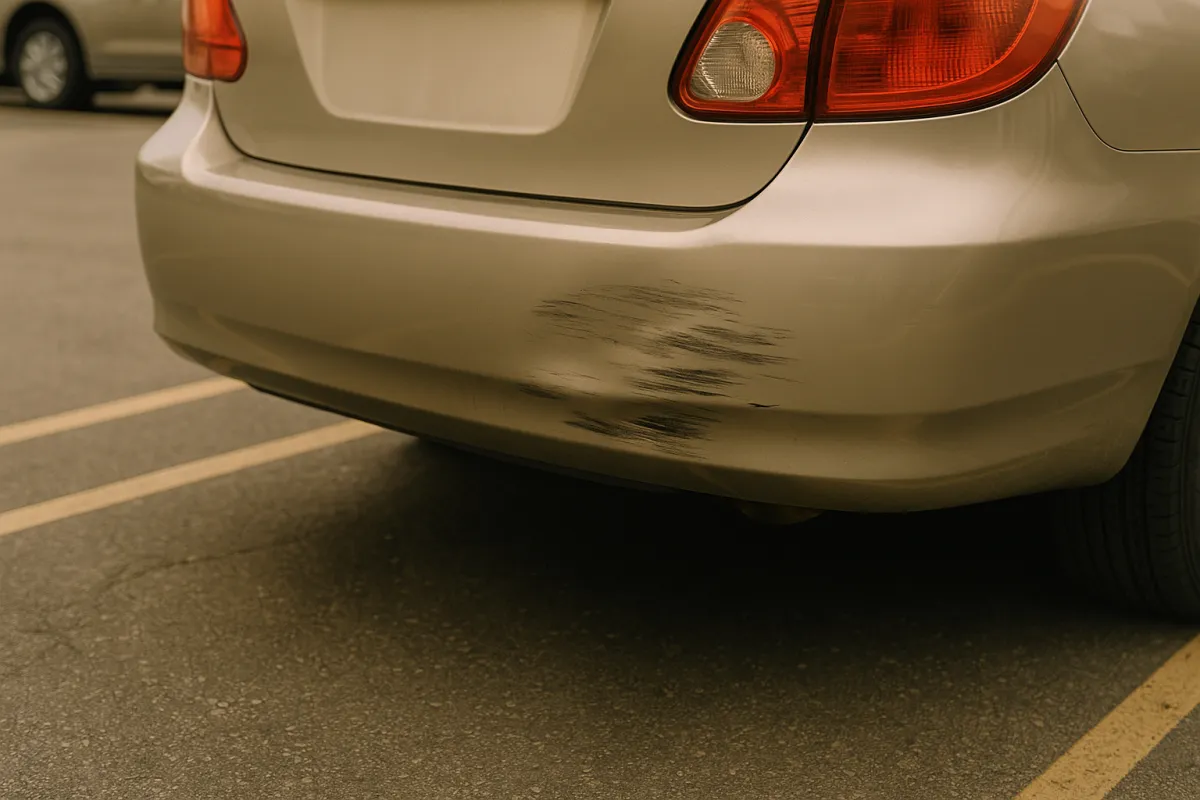
The three types of diminished value
When you research the subject you will keep meeting three named categories of diminished value, and knowing which one you are talking about keeps a claim clear. The table below lays them out plainly, and the sections after it take each one in turn.
| Type of diminished value | What it means |
|---|---|
| Inherent diminished value | The loss that remains after a complete, high-quality repair, caused purely by the accident being on the car’s record. This is the most commonly claimed type. |
| Immediate diminished value | The difference between the car’s value right after the accident and its value just before, measured before any repairs are made. It matters mainly for total-loss and valuation timing. |
| Repair-related diminished value | The additional loss caused by an incomplete, low-quality, or improper repair, such as mismatched paint or substituted parts, on top of the inherent loss. |
Most real-world claims center on inherent diminished value, because it is the loss that exists no matter how well the work is done and therefore the one an owner most needs compensated. Repair-related loss can be reduced or avoided by insisting on a proper repair with quality parts. Immediate diminished value is more of a valuation-timing concept than a routine claim. Keep the three straight and you will read insurer letters and appraisal reports with much less confusion.
Where a repaired car's value stands, illustratively
A rough split of a properly repaired car's pre-accident value into the part it keeps and the two loss components. Illustrative only, not a figure for any car.
The three shares sum to 100 and are illustrative only. A flawless repair shrinks the repair-related slice toward zero, but the inherent slice survives the best bodywork there is. Immediate diminished value is a pre-repair measurement and so is not shown here. Your own split depends entirely on your car, its damage, and your market.
Inherent diminished value
Inherent diminished value is the core of most claims: it is the value a car loses simply because it now carries an accident on its history, assuming the repair itself was done completely and well. It is called inherent because it is built into the situation and cannot be repaired away. You could restore the car to showroom condition and this loss would still be there, because it is a loss of reputation, not of function.
This is the type that most often survives an insurer’s objections, because the usual objection, that the repair was good, does not touch it. A good repair is precisely the assumption inherent diminished value is measured under. The question it answers is: given a fully and properly repaired car, how much less will the market pay for it because of the recorded accident? That is a question a comparable-based appraisal can answer with real evidence, which is why inherent diminished value claims lean so heavily on professional valuation.
The size of an inherent loss tracks a few things: how new and desirable the car is, since newer and more sought-after vehicles fall further in absolute terms; how severe the recorded damage was, since structural or airbag involvement frightens buyers more than a cosmetic ding; and how the car’s segment resells. A luxury or in-demand model with structural repair on its record can lose a meaningful share of value, while an older economy car with a minor repair may lose little. None of this produces a fixed figure, only a direction, which is exactly why the number has to be measured rather than assumed.
Immediate diminished value
Immediate diminished value is the gap between what the car was worth in the instant before the accident and what it was worth in the instant after, measured before any repair work is done. It is the raw drop caused by the damage in its unrepaired state. In practice this concept surfaces less often in everyday claims than inherent diminished value, because most owners repair the car and then claim the residual loss rather than the momentary pre-repair loss.
Where immediate diminished value does become important is in valuation and total-loss situations, where the timing of when value is measured changes the math. If a car is a total loss, the analysis is about pre-accident value rather than post-repair stigma, and the immediate framing is the relevant one. For a repairable car that gets repaired, the immediate figure is mostly a stepping stone to the inherent loss that remains afterward.
The reason to know the term at all is to avoid confusion when an appraiser or an insurer uses it, and to recognize that it is not the same thing as the loss you feel when you go to sell a repaired car later. That later loss is the inherent one. Immediate diminished value is a snapshot taken at the moment of damage, useful in specific valuation contexts and less central to a routine post-repair claim.
Repair-related diminished value
Repair-related diminished value is the extra loss that a poor or incomplete repair piles on top of the inherent loss. If the body shop used lower-quality aftermarket parts where the market expects original-equipment ones, left paint that does not quite match, failed to restore a structure fully, or cut a corner a knowledgeable buyer can spot, the car loses value for those reasons in addition to the accident-history stigma. This type is, in principle, the most controllable, because a complete and high-quality repair minimizes it.
This is one practical reason to care about how the car is repaired, not just that it is repaired. You generally have a say in where the work is done and can push for a proper repair with appropriate parts, which protects both the car’s function and its resale value. A repair that saves the insurer money by substituting cheaper parts can quietly enlarge your diminished value, shifting cost from their repair bill onto your future resale price.
If a substandard repair has already happened, the repair-related loss becomes part of what an appraisal can document and a claim can seek, though it also raises the question of whether the repair itself should be corrected. Separating the repair-related component from the inherent component matters because they have different cures: the inherent loss can only be compensated, while the repair-related loss can sometimes be fixed by redoing the work correctly. A good appraiser will distinguish the two.
When you can claim diminished value
Whether you can recover diminished value at all, and from whom, comes down to three things: who was at fault, whose insurer you are claiming against, and what your state and policy say. The general shape is that diminished value is most reliably recoverable when you were not at fault and are claiming against the at-fault driver’s insurer, because that carrier owes you for the full harm its insured caused, and lost value is part of that harm in most states.
The picture gets more complicated when the claim would be against your own insurer, which is where policy language and state rules start to govern the outcome. It is also shaped by comparative-fault rules, since your share of responsibility for the crash can reduce or bar a recovery in the same way it does for other damages, a mechanism our explainer on what a settlement is worth describes for claims generally.
The safest way to think about eligibility is as a set of questions to answer for your specific situation rather than a yes or no: Were you at fault, and if so how much? Is the responsible party insured, and adequately? Are you claiming against their carrier or your own? What does your state say about first-party diminished value, and what does your policy exclude? The next two sections take the third-party and first-party paths in turn, and the one after that covers the state-and-policy layer.
Third-party claims against the at-fault insurer
A third-party diminished value claim is one you bring against the insurer of the driver who was at fault, rather than against your own carrier. This is the strongest footing for most claims, because the at-fault driver’s liability coverage exists to make injured parties whole for the harm their insured caused, and in most states the lost market value of your car is part of that harm. You did nothing wrong, your car is worth less because of what their insured did, and you are asking to be restored to your prior position.
Because it rides on liability rather than on your own contract, a third-party claim generally sidesteps the policy-exclusion problem that complicates first-party claims. It does not sidestep the negotiation. The at-fault insurer has every incentive to value the loss low, will often reach for a formula that produces a modest number, and may argue that a good repair means little or no loss, an argument the inherent-value analysis answers directly. This is where your own appraisal earns its cost, giving you a documented figure to counter their formula.
Two practical limits apply. First, the at-fault driver must actually be insured and identifiable, since a claim against no one collects nothing, which is where uninsured-motorist questions arise. Second, the recovery can be constrained by available coverage, though for a property-damage loss like diminished value that is less often the binding ceiling than it is on a large injury claim. Handled with evidence, a third-party diminished value claim is the most direct route to recovering the loss.
First-party claims and why they are harder
A first-party diminished value claim is one you make against your own insurance company, typically when the other driver was uninsured, when you were partly or wholly at fault, or when you are relying on your own collision or uninsured-motorist coverage. These claims are harder, and the difficulty is mostly contractual. Many standard auto policies contain language that limits the insurer’s obligation to the cost of repair or replacement, which insurers read as excluding first-party diminished value, and courts in different states have treated that language differently.
The result is that first-party diminished value is genuinely state-dependent and policy-dependent, and there is no single national answer. In some states and under some policy wordings there is a path; in others the exclusion is enforced and the first-party claim does not succeed. This is not a place to rely on a general rule of thumb, because the outcome turns on the exact words of your policy and the law of your state, both of which change over time.
The honest guidance is to read your own policy’s property-damage and limit-of-liability provisions closely, look specifically for language about diminished or reduced value, and confirm how your state treats first-party claims before assuming either way. Because the analysis is technical and the stakes can be real, this is one of the clearer cases where a short conversation with a licensed attorney in your state pays for itself, a judgment our explainer on handling the adjuster reaches about disputed claims generally.
How state rules and your policy decide eligibility
Two documents ultimately govern whether a diminished value claim goes anywhere: your state’s law and your own insurance policy. State law sets the baseline rules on whether and how diminished value is recoverable, how comparative fault reduces it, and the deadline to bring it, and these rules vary enough that a claim that is routine in one state can be an uphill fight in another. This is why every honest statement about diminished value has to be hedged with “in most states” or “depending on your state,” because the exceptions are real and consequential.
Your policy is the second document, and it matters most on the first-party side. The limit-of-liability and property-damage sections are where any diminished value exclusion or limitation lives, and reading them tells you whether your own carrier has contracted around the loss. On the third-party side your policy matters less, since you are claiming against someone else’s coverage, but your own uninsured and underinsured motorist provisions become relevant when the at-fault driver has no coverage or too little.
The practical takeaway is to gather both documents before you decide how to proceed: pull your policy and locate the relevant clauses, and confirm your state’s stance on diminished value and its filing deadline. If either the policy language or the state rule is ambiguous, that ambiguity is itself a reason to get a professional read rather than guess, because a wrong assumption about eligibility can waste months and, worse, run past a deadline that ends the claim.
How diminished value is calculated: the 17c formula
There is no official, legally mandated formula for diminished value, but the most widely referenced method, and the one many insurers start from, is commonly called the 17c formula. Understanding its shape is useful both for reading an insurer’s offer and for sanity-checking any number you are quoted. The method is a sequence of three steps: establish a base figure, reduce it by a damage-severity multiplier, and reduce it again by a mileage multiplier. Each step narrows a broad starting figure toward a smaller estimate.
The name comes from the method’s origin in a specific insurance dispute, and it has since become a common industry reference point rather than a rule anyone is bound to. That distinction matters: an insurer using the 17c method is using a convention, not applying a law, and you are free to counter it with a better-supported figure from an appraisal. The formula’s usefulness is that it makes the logic explicit, showing how severity and mileage are meant to move the number, which helps you argue when an insurer applies it in a way that understates your loss.
The estimate helper on this page mirrors this three-step shape so you can see how the pieces interact, but treat its output the way you should treat the formula itself: as illustrative machinery for understanding the structure, never as a valuation of your specific car. The next three sections take the steps one at a time.

The base value step
The first step in the 17c method is to set a base figure, and the common convention is to start from a percentage of the car’s pre-accident market value. The idea is that the loss cannot sensibly exceed some ceiling tied to what the car was worth in the first place, so the method caps the starting point at a share of that value before any further reductions. A more valuable car has a larger base to begin from, which is why identical damage costs a high-value car more in lost value than it costs a cheap one.
The important honesty here is that the base is a starting ceiling, not the answer. It represents the largest figure the method will consider before the damage and mileage multipliers pull it down, and in most real cases the final number lands below the base, often far below it, because it is rare for both multipliers to sit at the very top of their scales at once. Reading an offer, you should recognize the base as the top of the funnel and expect the two multipliers to shrink it.
To use this step you need a credible pre-accident value for your specific car, which is itself a small research task: the year, make, model, trim, options, condition, and local market all feed it. Getting this figure right matters because everything downstream scales off it, and an insurer that lowballs the pre-accident value quietly lowballs the whole diminished value calculation. Establishing a defensible pre-accident value is one of the things a professional appraisal does well.
The damage multiplier
The second step applies a damage-severity multiplier that scales the base figure according to how serious the recorded damage was. The heavier and more structural the damage, the larger the multiplier and the larger the retained portion of the base; the lighter and more cosmetic the damage, the smaller it becomes. The logic mirrors the market: buyers discount a car with structural or airbag damage on its record far more than one with a repaired scuff, so severity belongs at the center of the estimate.
In the common version of the method the multiplier runs on a scale from a maximum for severe structural damage down to zero for no real damage, with intermediate steps for major, moderate, and minor damage. The precise labels and values are a convention rather than a law, and different practitioners set them slightly differently, which is one reason two 17c calculations of the same car can disagree. What is consistent is the direction: more severe recorded damage points to a larger loss.
This step is also where insurers and owners most often clash, because an insurer may characterize damage as moderate that an owner and an independent appraiser would call major, and the multiplier turns that characterization directly into dollars. Documenting the true severity of the damage, with repair invoices, photographs, and the shop’s assessment, is how you support the higher multiplier your claim may deserve. The severity you can prove, not the severity the insurer prefers, is what should drive this step.
Illustrative diminished value by damage severity
Rough loss as a share of a car's pre-accident value, assuming a low-mileage vehicle. Illustrative only, not a prediction for any car.
Bar widths are each severity tier's illustrative loss as a share of the 10% top-of-scale reference, holding mileage at the most favorable band. The four tiers are the same ones the estimate helper on this page offers, so the chart and the tool tell the same story. Real losses vary widely with the car's value, age, market, and history. These are reference shapes for understanding the method, not figures for any specific vehicle.
The mileage multiplier
The third step applies a mileage multiplier that reduces the figure as the odometer climbs. The reasoning is that a car with high mileage has already lost much of its value to age and use, so an accident subtracts less in absolute terms from a well-worn car than from a low-mileage one. A nearly new car with few miles carries a mileage multiplier near the top of the scale, while a high-mileage car carries one near the bottom, dragging the estimate down.
As with the damage multiplier, the specific mileage bands and values are a convention, typically stepping down from a full multiplier at very low mileage to zero at high mileage. The exact thresholds vary between practitioners, but the direction is fixed: more miles, smaller diminished value. This is why the same recorded damage produces a much larger loss on a low-mileage car than on an identical high-mileage one, and why diminished value claims are generally most worthwhile on newer, lower-mileage vehicles.
Stacking the three steps shows why the final number is usually a modest slice of the car’s value: the base is a fraction of pre-accident value, and the damage and mileage multipliers each cut that fraction further. A severe-damage, very-low-mileage car sits at the top of both scales and so keeps essentially the whole base, which is the rare case where the ceiling and the estimate meet; a minor-damage, high-mileage car loses almost all of it to the two multipliers and lands near zero. The estimate helper lets you move these levers and watch the interaction, which is the whole value of understanding the method.
Why the 17c formula is only a starting point
For all its usefulness as a mental model, the 17c formula should never be mistaken for a valuation of your car, and treating it as one is a mistake insurers are happy to let you make. The formula is a generic convention built from round-number multipliers, and it knows nothing about your specific vehicle’s desirability, your local resale market, the exact nature of the recorded damage, or how buyers in your area actually price an accident history. Those specifics are precisely what move a real number, and none of them appears in the formula.
The formula’s blind spots run in both directions but usually against the owner. Its base cap can understate the loss on a highly desirable model that the market punishes harder than a percentage rule assumes. Its damage multiplier can undervalue structural damage that buyers treat as disqualifying. And insurers sometimes apply their own even more conservative variants, producing offers well below what an independent appraisal supports. The formula, in short, is where a negotiation starts, not where it should end.
The corrective is evidence. A professional appraisal that compares your actual repaired car against real clean-history comparables in your market replaces the formula’s generic guesswork with specific, defensible numbers, and it is the tool that lets you challenge a formula-based lowball. Use the 17c method to understand the shape of the question and to read the insurer’s opening figure, then rely on an appraisal to answer it. The next sections cover what that appraisal is and how to build the claim around it.
How to prove diminished value with an appraisal
The evidence that carries a diminished value claim is an independent appraisal, and for anything beyond a very small claim it is close to indispensable. An insurer’s formula produces a number that favors the insurer, and without your own credible valuation you are left arguing against their figure with nothing but your opinion. A professional diminished value appraisal supplies the missing piece: a documented, reasoned loss figure produced by someone qualified to value cars, which turns your demand from an assertion into supported evidence.
A good appraiser does several things the formula cannot. They inspect the actual repaired vehicle rather than a generic profile of it. They establish a defensible pre-accident value specific to your car’s trim, options, and condition. They document the recorded damage and its severity from the repair records. And, most importantly, they compare your car against clean-history comparables in your local market to measure the real price gap the accident created. That market-based comparison is the heart of a credible valuation, because it reflects how buyers actually price the loss rather than how a formula assumes they do.
Choosing an appraiser matters: you want someone experienced specifically in diminished value, ideally with local market knowledge, whose report lays out its reasoning clearly enough to withstand an insurer’s pushback. The appraisal has a cost, and part of deciding whether to pursue the claim is weighing that cost against the likely recovery, which is easier once you have a rough sense of the loss. On a newer, higher-value car with significant damage the appraisal usually pays for itself; on an older car with a minor repair it may not.

What a diminished value appraisal contains
A credible diminished value appraisal is more than a single number; it is a short reasoned report, and knowing what belongs in one helps you judge whether the appraisal you commission is worth its cost. At its core it states the appraiser’s conclusion, the estimated diminished value, but the value of the report is in the support behind that figure. Without the reasoning, a number is just another assertion for the insurer to dispute.
The support typically includes a clear statement of the vehicle’s pre-accident value, with the basis for it; a description of the damage and repairs, drawn from the repair invoices and photographs; and, crucially, a comparison against clean-history comparables in the relevant market that demonstrates the price gap the accident created. It should also identify the appraiser and their qualifications, since the weight an insurer or a court gives the report depends partly on who wrote it. A report that shows its work is far harder to wave away than a bare figure.
For your part, you supply the raw material: the repair estimate and final invoice, photographs of the damage before repair, the vehicle history report showing the recorded accident, your registration and mileage, and any documentation of the pre-accident condition. The better organized this material is, the better the appraisal and the stronger the claim built on it. Keeping everything in one place from the start, the same discipline our explainer on filing a car accident claim urges for the claim as a whole, pays off directly here.
The diminished value claim process step by step
With the pieces defined, the process of pursuing a diminished value claim follows a recognizable order. First, make sure the car is repaired properly and keep every document from the repair, since the repair records anchor everything that follows. Second, confirm the basics of eligibility: who was at fault, whether you are claiming third-party or first-party, and what your state and policy allow, so you are aiming the claim at the right party.
Third, establish the loss with evidence, which for most claims means commissioning an independent appraisal that produces a defensible figure. Fourth, present the claim to the responsible insurer in writing, stating that you are claiming diminished value separately from the repair cost, attaching the appraisal and supporting documents, and demanding a specific figure supported by that evidence. A written, documented demand is far harder to brush aside than a phone call, a point our explainer on dealing with the adjuster makes about every kind of claim.
Fifth, expect negotiation. The insurer will often respond with a formula-based figure below your appraisal, and the back-and-forth is about closing that gap with evidence rather than emotion. Answer their number with your documented one, hold to what your appraisal supports, and ask them to justify their figure in writing. Sixth, if the gap will not close and the amount justifies it, escalate, whether through your state’s insurance complaint process, a small-claims filing where the amount fits, or a licensed attorney. Throughout, watch the deadline, because the process can consume months and the statute of limitations does not pause for negotiation.
Documenting your diminished value claim
Documentation is not a side task in a diminished value claim; it is the claim. Because the loss is invisible, a car that looks and drives fine but carries a discounted history, the only way to make it real to an insurer is on paper. The stronger and better-organized your file, the harder your claim is to dismiss, and the weaker your file, the easier it is for an insurer to offer a formula number and move on.
The core of the file is the repair record: the estimate, the final invoice, an itemized list of what was damaged and what was done, and photographs of the damage before repair. Alongside it sits the proof of the accident on the record, the vehicle history report, and the material an appraiser needs to establish pre-accident value, such as your trim, options, mileage, and condition before the crash. The appraisal report itself then becomes the centerpiece, tying the rest together into a loss figure.
Keep all of it in one place, dated and complete, and add to it as the claim progresses: every letter to and from the insurer, every offer, and the reasoning attached to each. This is the same evidence discipline that supports any accident claim, and our explainer on what a settlement is worth treats documentation as the difference between a supported number and an argued-down one for exactly this reason. A diminished value claim simply makes the point sharper, because there is nothing to see and everything to prove.
Statute of limitations and deadlines
Every diminished value claim runs against a clock, and the clock is set by state law. The statute of limitations is the deadline to bring a claim, and once it passes an otherwise valid claim can be barred regardless of how strong it is. For property-damage claims, of which diminished value is one, deadlines vary widely by state and commonly fall somewhere in a multi-year range, but a general range is not something to rely on for your own claim. The only figure that matters is your state’s actual deadline for your type of claim.
There are two wrinkles worth flagging. First, because diminished value is a property-damage concept, it may run on a different clock than an injury claim from the same accident, so do not assume that meeting one deadline means you have met the other. Second, the negotiation process itself can eat months, and an insurer in no hurry to pay has no incentive to remind you the deadline is approaching. The responsibility to track it is entirely yours.
The safe practice is to confirm your state’s specific statute of limitations early, ideally with a licensed attorney, and to work backward from it so that you leave time for an appraisal, a demand, and negotiation before it runs. Treat the deadline as the hard boundary it is, note it the day you start, and do not let a good claim expire because the clock ran out during a negotiation that was going nowhere.
Common mistakes in diminished value claims
A handful of errors recur in diminished value claims, and recognizing them is the cheapest way to avoid them.
- Assuming a good repair means no loss. The inherent loss survives even a perfect repair, because it comes from the accident record, not the repair quality. Do not let a body shop’s fine work talk you out of a real claim.
- Accepting the insurer’s formula figure as final. A 17c-style number is an opening position built from generic multipliers, not a valuation of your car. Without your own appraisal you are negotiating against their number with nothing of your own.
- Skipping the appraisal to save its cost. On a claim of any size, the appraisal is usually the piece that recovers more than it costs, and going without it leaves you unarmed. Weigh its cost against the likely loss rather than avoiding it reflexively.
- Mixing up the repair claim and the value claim. The insurer paying for repairs does not resolve diminished value; it is a separate loss you must claim separately and explicitly. Assume nothing is included that you did not ask for.
- Ignoring the deadline. The statute of limitations can end a claim mid-negotiation, and no one else is tracking it for you. Confirm it early and work backward from it.
- Guessing at eligibility. First-party diminished value in particular turns on policy language and state law, and a wrong assumption can waste months. When it is unclear, get a professional read before proceeding.
Each of these shares a root: treating an invisible, technical loss casually. The owners who recover diminished value are the ones who document it, value it independently, and pursue it deliberately.
When to get a lawyer for a diminished value claim
Plenty of small, clear diminished value claims are handled by owners themselves, especially third-party claims where the appraisal figure is modest and the insurer is reasonable. The honest limits show up as the claim grows in size or difficulty. A high-value vehicle with a large recorded loss, a first-party claim that turns on policy language and state law, an insurer that denies or stonewalls, or a comparative-fault dispute all raise the stakes and the complexity past what a self-handler can comfortably manage.
A lawyer changes a diminished value claim in a few concrete ways. They can read your policy and your state’s law to tell you whether a first-party claim is even viable, which is a technical question with real money attached. They bring negotiating leverage and a credible next step that an unrepresented owner cannot, and they can escalate through the right channel, whether a complaint, a suit, or small claims, when an insurer will not move. On a larger claim, that leverage can lift the recovery by more than any fee, the same calculus our explainer on what a settlement is worth applies to representation generally.
The practical way to decide is to get a sense of the loss first, through an appraisal or the estimate helper, and then weigh the claim’s size and difficulty against the friction of pursuing it. For a small, clean claim, self-handling with a good appraisal is often enough. For a large or disputed one, a free consultation with a licensed attorney in your state is a low-cost way to learn whether representation would pay for itself. Neither answer is universal, and the point of the consultation is to find out which applies to you.
A worked illustrative example
Every figure here is invented to show the shape of the reasoning, not to predict anything. Suppose a two-year-old car with a pre-accident value of twenty-two thousand dollars, and an odometer just past the lowest mileage band, is rear-ended, suffers structural damage, and is repaired completely and well. The repair itself is paid by the at-fault driver’s insurer, so the physical damage is cured. The owner then turns to the value the accident left on the record.
Walking the 17c shape: the base begins as a share of the pre-accident value, giving a starting ceiling of roughly two thousand two hundred dollars on the illustrative ten percent convention. The damage was structural, so the damage multiplier sits at the top of its scale and retains that full ceiling. The mileage sits one band down from the lowest, so the mileage multiplier trims the figure by about a fifth rather than gutting it. Multiplying the three together points toward an illustrative loss near one thousand seven hundred and sixty dollars, about eight percent of the car’s value: a meaningful slice, and below the base ceiling, which is exactly how the method is meant to behave. The estimate helper opens on these same figures so you can watch the levers interact.
Now the reality check. The insurer’s own formula comes back lower, characterizing the damage as moderate rather than structural and starting from a conservative pre-accident value. The owner counters with an independent appraisal that establishes a defensible pre-accident value, documents the structural severity from the repair records, and compares the repaired car against clean-history examples in the local market, producing a higher, evidence-backed figure. The negotiation closes some of the gap. The lesson is the through-line of this whole explainer: the formula sketches a starting number, and evidence, not arithmetic, decides where a real claim lands.
The bottom line
A diminished value claim recovers something real but invisible: the resale value your car lost by having an accident on its record, a loss that a flawless repair cannot undo because it attaches to history, not condition. The loss comes in three named forms, with the inherent stigma of a clean repair being the one most claims center on. The claim is usually strongest against the at-fault driver’s insurer, while a first-party claim against your own carrier depends heavily on your policy’s wording and your state’s law. The commonly cited 17c method, a base figure narrowed by damage and mileage multipliers, is a useful way to understand the shape of the number and to read an insurer’s offer, but it is only a starting point, and an independent appraisal comparing your car against clean-history examples is the evidence that turns a demand into a documented claim. Confirm your state’s deadline early, document relentlessly, weigh the likely loss against the effort, and for a large or disputed claim put the question to a licensed attorney in your state. Do that, and a loss most owners never even notice becomes something you can actually recover.
A closing note in our own words: this explainer exists to teach you how diminished value generally works and how a claim for it is built, and that is the whole of its purpose. It is not legal advice, it creates no attorney-client relationship, and it cannot account for the diminished value rules, policy exclusions, comparative-fault standards, and filing deadlines that differ by state and change over time. Every percentage, multiplier, and dollar figure here, including the estimate helper, is illustrative and invented to show structure; none is a valuation of any real car or a prediction of what any real claim will recover, which no honest source could promise. When the question is what your own vehicle lost and whether you can claim it, a professional appraisal and a licensed attorney in your state, looking at your specific car, your specific policy, and your specific facts, are the sources worth trusting before you accept, reject, or sign anything.
Frequently asked questions
What is a diminished value claim?
A diminished value claim seeks compensation for the market value your car loses because it has been in an accident, even after it is repaired to a high standard. Two otherwise identical cars, one with a clean history and one with a repaired collision on its record, do not sell for the same price, and that gap is the diminished value. The claim is separate from the cost of the repairs themselves, which the insurer typically pays directly to the body shop. You are asking to be made whole for the resale value the accident permanently took away. Whether you can recover it, and how much, depends on your state, your policy, and who was at fault, which this explainer walks through.
Can I file a diminished value claim against my own insurance?
Usually the stronger claim is a third-party claim against the at-fault driver's insurer, because that carrier owes you for the full harm their insured caused, and diminished value is part of that harm in most states. A first-party claim against your own insurer is different: many standard auto policies contain language that limits or excludes first-party diminished value, and a handful of states have addressed the question in different ways. So the honest answer is that it depends on your policy wording and your state, and you should read your own policy and confirm the rule locally. If you were not at fault, the at-fault carrier is generally where the claim belongs.
How is diminished value calculated?
There is no single official formula, but the most widely referenced starting point is the so-called 17c method, which many insurers reach for. It begins with a base figure, commonly a percentage of the car's pre-accident value, then reduces that figure by a damage-severity multiplier and again by a mileage multiplier, so heavier damage and lower mileage point toward a larger loss. The result is only a rough starting number, not a valuation of your specific car. A credible claim is usually supported instead by a professional appraisal that compares your repaired vehicle against clean-history comparables in your local market. Treat any formula output, including the estimate helper on this page, as illustrative machinery, not a promise.
How much diminished value can I claim?
There is no meaningful average, because the loss depends on your car's make, age, mileage, pre-accident value, the severity of the damage, and your local resale market. A lightly scuffed bumper on a high-mileage economy car may lose almost nothing, while structural or airbag damage on a newer, desirable vehicle can lose a substantial share of its value. Any single dollar figure quoted without seeing your car and its history is a guess. The way to answer the question for your own vehicle is a professional diminished value appraisal, and for a disputed or high-value claim, a conversation with a licensed attorney in your state.
Do I need an appraisal for a diminished value claim?
For anything beyond a small, clear claim, yes, an independent appraisal is the single most useful piece of evidence you can bring. An insurer's own formula tends to produce a low number, and without your own credible valuation you are negotiating against their figure with nothing of your own. A professional appraiser inspects the repaired car, documents the accident history, and compares it against clean-title comparables to produce a defensible loss figure with the reasoning attached. That report is what turns a diminished value demand from an assertion into a documented claim. The cost of the appraisal is often modest relative to the value it can recover, though that trade-off depends on the size of your claim.
How long do I have to file a diminished value claim?
Deadlines are set by state law and vary widely, commonly falling somewhere in a two-to-four-year range for property damage, but you should never rely on a general range for your own claim. The clock is a hard stop, and missing it can end an otherwise valid claim regardless of its merits. Because diminished value is a property-damage concept, it may follow a different deadline than an injury claim from the same accident, which adds another reason to confirm the specific rule early. Do not let a deadline you have not checked decide the outcome. Confirm your state's statute of limitations with a licensed attorney, and start the process well before it runs.
Is a diminished value claim worth filing?
It depends on how much value the car actually lost, which is exactly what an appraisal is for. On a newer, higher-value vehicle with significant repaired damage, the recoverable loss can be meaningful and well worth pursuing. On an older, high-mileage car with minor cosmetic damage, the loss may be small enough that the effort and any appraisal cost outweigh it. The practical test is to get a sense of the likely loss before committing, then weigh it against the friction of the claim. For a larger or disputed claim, a free consultation with a licensed attorney is a low-cost way to gauge whether it is worth pursuing formally.
Does diminished value apply to leased or financed cars?
The value can still be lost, but who is entitled to claim it can be more complicated when a lender or leasing company holds an interest in the vehicle. On a financed car you generally own it and can typically pursue the loss, though the accident history still affects the car's value at trade-in or payoff. On a lease, the leasing company usually owns the vehicle, which can change who has the right to a diminished value recovery and how any end-of-lease charges interact with it. Because these arrangements vary by contract and state, read your lease or loan terms and confirm your standing with a licensed attorney before assuming the claim is yours to make.

Hamza Hai is the editor of TortWise. She holds an MBA and reviews the site's articles against our editorial standards, checking that every figure is labelled for what it is, that nothing is presented as verified fact without a source the reader can check, and that the writing stays useful to a non-specialist.