What's on this page
- What a rideshare accident claim actually is
- Why the app decides which policy responds
- The period structure, in general terms
- Period zero: the app is off
- Period one: the app is on and the driver is waiting
- Periods two and three: en route to a pickup and carrying a passenger
- Why the personal policy commonly denies a working driver
- The rideshare endorsement and the gap it was built for
- App data and trip records as evidence
- Preserving the record before it becomes someone else’s file
- If you were the passenger
- If you were driving the other vehicle
- If you were a pedestrian or a cyclist
- If you were the rideshare driver
- Uninsured and underinsured coverage inside the rideshare policy
- The independent contractor question
- Why suing the platform is harder than claiming on the policy
- Comparative fault when three or more parties are involved
- Who pays the medical bills while the coverage question is open
- How value is built once coverage is settled
- A worked example across the periods
- What to do in the first week after a rideshare crash
- What the insurer will try early
- Common mistakes in rideshare claims
- When representation is worth the consultation
- Questions worth asking at a first consultation
- The bottom line
Short answer: Which insurance pays after a rideshare accident depends on the driver's app status at impact, not on who owned the car. The common pattern runs in phases: app off means the personal policy only, app on and waiting means a limited contingent layer, and en route or carrying a passenger means a much larger commercial layer. Personal policies commonly exclude driving for hire. Preserve trip records and consult a licensed attorney in your state.
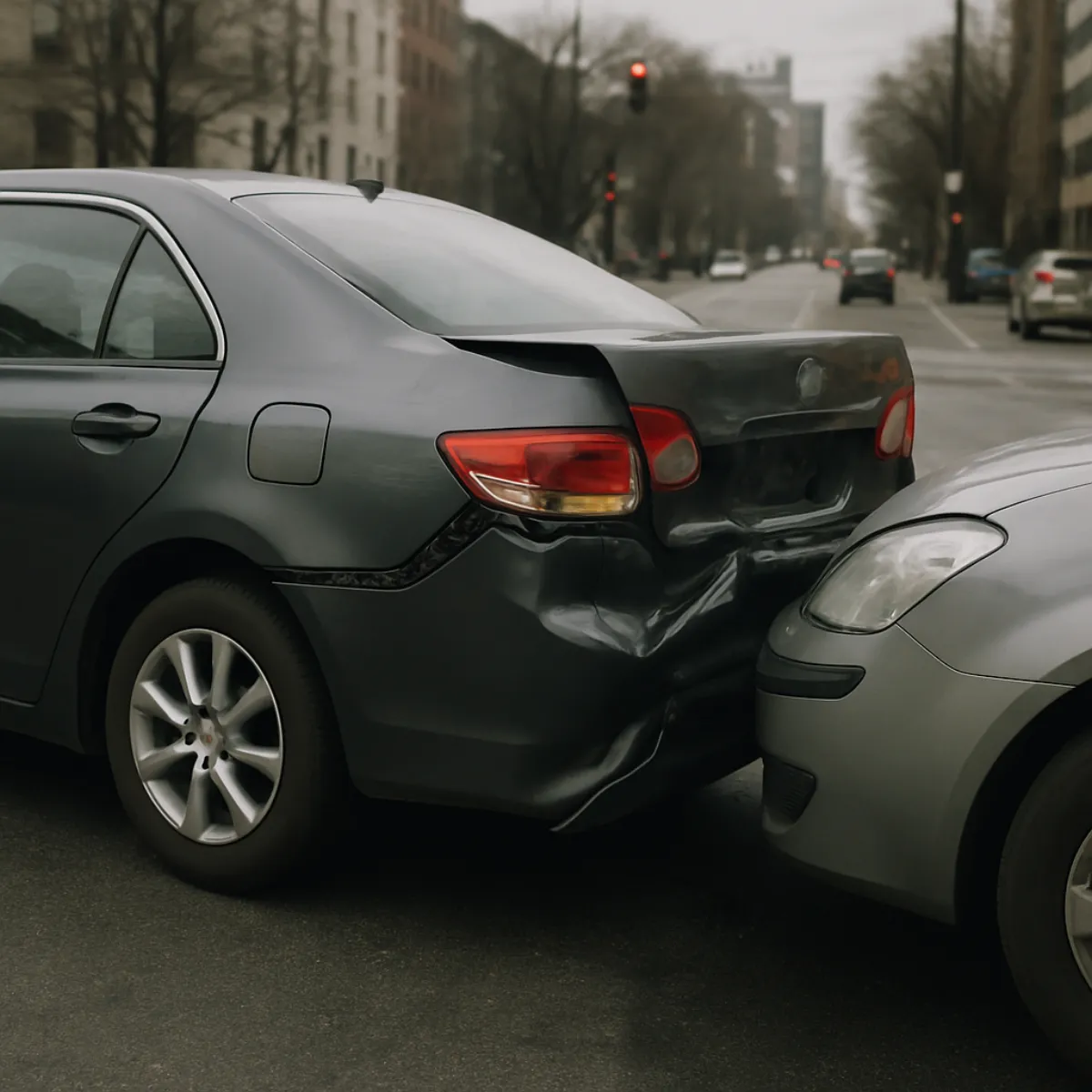
Two cars collide at an intersection. The injuries are the same, the medical bills are the same, the police report reads the same. But if one of those cars had a rideshare app open on the windscreen mount, the amount of insurance standing behind the claim could be twenty times larger, or roughly the same as any private motorist carries, and which of those is true depends on something invisible from the roadside: what the app was doing in the second before impact.
That is the whole distinguishing feature of a rideshare claim, and it is not a technicality. TortWise covers car, truck, motorcycle, bus and pedestrian claims, and in every one of those the coverage question is broadly settled once you know who was at fault. Here it is not. This explainer works through the period structure that decides which policy responds, why a driver’s personal insurer usually walks away when the driver was working, how app data becomes the evidence that settles the argument, and how the answer changes depending on whether you were the passenger, the other driver, a pedestrian, or the rideshare driver yourself. TortWise is an informational publisher and not a law firm, so what follows is orientation rather than advice about your situation. Our explainer on what to do after a car accident covers the ground common to any collision, and our note on what a personal injury claim is worth covers the valuation frameworks this article builds on rather than repeats.
Key takeaways
- Which policy answers a rideshare crash depends on the driver's app status at impact, not on who owned the car or whose name is on the registration.
- The common pattern runs in phases: app off means the personal policy only, app on and waiting means a limited contingent layer, and en route or carrying a passenger means a much larger commercial layer.
- Standard personal auto policies commonly exclude driving for hire, so a denial from the driver's own insurer is an expected step rather than the end of a claim.
- Trip records, acceptance timestamps and GPS data on the platform's servers are what actually prove app status, and nobody preserves them on your behalf.
- Claiming against the arranged coverage is generally more reliable than suing the platform directly, because the independent contractor question is unsettled and varies by state.
What a rideshare accident claim actually is
Underneath the coverage puzzle, a rideshare claim is an ordinary injury claim. Someone owed a duty of care, fell short of it, caused a collision, and caused harm that can be measured in medical treatment, lost income, and the disruption to a normal life. Every element that has to be proved in a two-car collision has to be proved here, in the same way, with the same kinds of evidence.
What changes is the answer to a question that is usually trivial: which insurance policy is on the hook. In a private collision, the at-fault driver’s liability policy responds, subject to its limits, and the only real dispute is about fault and value. In a rideshare collision, there may be two or three candidate policies, each with a different limit, each administered by a different company, and each with a contractual reason to say the other one applies.
That is why this explainer spends most of its length on coverage rather than on injury valuation. The valuation frameworks are covered elsewhere on TortWise and they apply here unchanged. The coverage question is the part with no equivalent anywhere else in the subject, and it is the part that most often decides whether a documented loss is actually recoverable.
Two practical implications follow immediately. The evidence that matters most in the first week is digital rather than physical. And an early denial letter is information about the structure rather than a verdict on the merits.
Why the app decides which policy responds
Rideshare insurance is not a special branch of law. It is a contractual arrangement built to solve a commercial problem: personal auto policies are priced for personal driving and generally exclude carrying passengers for money, while commercial auto policies are priced for full-time commercial use and would be absurdly expensive for someone driving a few evenings a week.
The arrangement that emerged splits the difference by time. Coverage is switched on and off according to what the driver is doing at each moment, measured by the app itself, because the app is the only thing that knows. When the driver is not working, the personal policy carries the risk it was priced for. When the driver is working, a layer arranged by the platform sits over the top, and the size of that layer scales with how commercial the moment is.
The result is a claim system where a stopwatch matters as much as a skid mark. A driver who accepted a request thirty seconds before impact is in one coverage world. The same driver, on the same road, at the same speed, with the app open but no request accepted, is in a different one with far less money behind it.
This is unusual enough that it catches out experienced claimants and occasionally the adjusters themselves. It is also the reason a rideshare claim can stall for weeks over a question that has nothing to do with who ran the light.
The period structure, in general terms
The industry commonly describes the working session in numbered phases, usually zero through three, though the labels differ between platforms and some group them differently. The structure below is the common pattern rather than a rule, and both the boundaries and the amounts are set by each platform’s current terms and by state law.
Period zero is the app closed. The driver is a private motorist doing private driving, and the personal auto policy is the only coverage in the picture.
Period one is the app open with no request accepted. The driver is available for work but carrying nobody and travelling nowhere in particular. A contingent liability layer arranged by the platform typically responds here, and it is usually modest.
Period two begins the moment a request is accepted and runs while the driver travels to the pickup point. Period three runs from the moment the passenger is in the vehicle until they are dropped off. These two are commonly grouped at the same, substantially higher, limit.
The boundaries are what get litigated. A driver who has just dropped off a passenger and has not yet received a new request has moved from period three back to period one, and the coverage available may have fallen sharply in the space of a few seconds. Where exactly that transition sits, and what the app recorded, is frequently the argument.
Period zero: the app is off
When the app is closed, there is nothing rideshare about the collision. The driver is running errands, collecting children, or driving home, and the vehicle is an ordinary private car covered by an ordinary private policy.
That means the claim proceeds exactly like any other car accident claim, and our explainer on filing a car accident claim covers the mechanics without modification. The at-fault driver’s liability coverage responds up to its limits, your own collision and medical coverages may apply, and if the driver was uninsured or thinly insured, your own uninsured or underinsured motorist coverage becomes the layer that matters.
The constraint here is the familiar one. Private motorists frequently carry limits set at or near a state minimum, and a serious injury can exhaust those limits before the treatment is even finished. Illustratively, a personal policy might carry a per-person bodily injury limit around $50,000, which sounds substantial until a surgery and three months out of work are priced against it.
The reason period zero matters to this article is that it is the floor. Every argument the platform’s insurer might make about app status is, in effect, an argument that the case belongs here, in the smallest coverage available. That is not necessarily bad faith; it may be correct. But it explains why the app-status question is contested rather than administrative.
Period one: the app is on and the driver is waiting
This is the thinnest layer in the structure and the one most people are surprised by. The driver is working, in the ordinary sense of the word: the app is open, they are available for requests, and they may be circling a busy district waiting for one. But no passenger has been accepted and no trip is running.
The coverage that typically responds in this phase is described as contingent, meaning it sits behind the driver’s personal policy and steps in where that policy does not respond. Because a standard personal policy usually excludes driving for hire, the contingent layer is often the only coverage actually available, despite being structured as a backstop.
The limits in this phase are commonly much lower than in the trip periods. Illustratively, a contingent layer might carry something in the region of $50,000 per injured person with a per accident cap around $100,000, plus a smaller property damage figure. Those numbers are illustrative and are not any platform’s terms; amounts vary by platform and by state and are revised over time.
The practical effect is a coverage cliff. A person seriously injured by a driver in period one may find that the money available is closer to a private motorist’s limits than to the commercial figure they were expecting when they heard the word rideshare. That is where your own uninsured or underinsured motorist coverage becomes the difference between a documented loss and a recovered one.
Periods two and three: en route to a pickup and carrying a passenger
Once a request is accepted, the coverage picture changes character entirely. The driver is now performing the service, and the layer that responds is a commercial liability policy of a size that private motoring never involves.
The figure commonly associated with these periods is around $1,000,000 in third-party liability, and it is usually the same whether the driver is travelling to collect a passenger or has one in the back seat. That figure is an illustrative round number frequently cited in general discussion rather than a quoted term, and the actual amount, structure, and any deductible depend on the platform’s current arrangement and on state requirements.
Two features of these periods are worth understanding. First, the coverage generally protects third parties, meaning the passenger, the other driver, a pedestrian, or anyone else harmed, rather than being a benefit the driver claims for themselves. Second, the higher limit removes the ceiling that constrains most serious injury claims, which changes the negotiation. When coverage is not the binding constraint, the fight moves to fault and to value, and the defence has both reason and resources to contest both.
The transition points remain the vulnerable part. A trip that has ended, a request that was accepted and then cancelled, or a driver logged in on two platforms at once can all put the applicable period genuinely in dispute.
Illustrative liability coverage available, by app period
Invented reference figures on one shared scale, shown to make the relative order of magnitude visible. These are not any platform's terms. Amounts and availability vary by platform and by state and change over time.
Each bar width is that tier's illustrative figure as a share of the $1M reference. The two short bars at the top are the point of the chart: the same collision, the same injury, and the same driver can sit against ten or twenty times less money depending on a state the app was in. Our settlement range estimator will produce a value without knowing any of this, which is exactly why the coverage question has to be answered separately.
Why the personal policy commonly denies a working driver
Standard personal auto policies generally contain an exclusion for carrying passengers for a fee, often phrased in terms of livery, public or livery conveyance, or use as a public or livery vehicle. The wording differs between insurers and states, but the intent is consistent: the policy was priced for personal driving and does not cover commercial passenger transport.
That exclusion is why an injured claimant, having identified the at-fault driver and their insurer in the normal way, can receive a denial that reads as though the claim itself was rejected. It was not. What was rejected was the idea that this particular policy covers this particular use.
The denial is useful rather than damaging, and it is worth obtaining in writing with the stated reason. It documents the coverage position, it supports the argument that the platform’s layer is the one that must respond, and it removes an avenue the platform’s insurer might otherwise point to.
Where this becomes difficult is when the two insurers disagree about the facts. The personal insurer says the driver was working, so the exclusion applies. The platform’s insurer says no trip was running, so its layer does not apply, or applies only at the contingent level. The injured person sits between two companies, each with a coherent reason not to pay, and the only thing that resolves it is the record of what the app was doing.
The rideshare endorsement and the gap it was built for
Some personal insurers offer an optional endorsement, sometimes called a rideshare or transportation network endorsement, that extends the personal policy into the waiting phase. Availability varies by insurer and by state, and the terms vary as well.
Where a driver carries one, the coverage picture in period one improves substantially, because the personal policy responds in a phase where it otherwise would not, and the contingent layer sits behind it as designed. Where a driver does not carry one, the contingent layer is doing the work alone.
For an injured claimant this matters in a specific way: it is another policy that may exist, and its existence is not obvious. Asking whether the driver carried a rideshare endorsement is a reasonable early question, and the answer can add a layer of coverage that nobody mentioned.
For a driver reading this, the endorsement question is about their own exposure rather than someone else’s claim. Driving with the app open under a policy that excludes the activity leaves a gap where the driver’s own vehicle damage, their own injuries, and in some configurations their personal liability all sit unprotected. Whether an endorsement is available, what it costs, and what it actually covers are questions for a licensed insurance professional in your state rather than for an article, because the products differ and change.
App data and trip records as evidence
Everything above turns on a single factual question, and that question is answered by data held by the platform.
The records that speak to it are specific. There is a trip identifier for any accepted request. There are timestamps for when the request was offered, accepted, when the driver arrived at the pickup, when the trip started, and when it ended. There is GPS breadcrumb data showing the vehicle’s position and speed through the session. There is a driver session log showing when the app went online and offline. In many configurations there is also in-app messaging and a fare record.
Together these establish which period was running at the moment of impact with a precision that no witness account can match. They also do something less obvious: they corroborate or contradict the driver’s own description, which matters because a driver has reasons of their own to characterise the moment one way or another.
A passenger is in the strongest position here, because a copy of the trip record sits in their own account. A receipt with a start time, an end time, a route map, and a driver name is independent evidence that a trip was running, and it cannot be revised by anyone else.
Everyone else is dependent on records held by a party that owes them nothing, which brings the discussion to preservation.
Preserving the record before it becomes someone else’s file
Digital records are not permanent by default. Retention is a business decision, and business decisions are made without reference to a claim nobody has made yet.
A written preservation request, sent early to the platform and to the insurer handling the claim, states that a claim is anticipated and asks that specified categories of data be retained rather than deleted or overwritten under routine policies. The useful categories are the ones listed above: trip identifiers, acceptance and trip timestamps, GPS breadcrumbs, session logs, in-app communications, and the fare record for the trip in question.
Its function is the same as in any claim where the evidence sits with the other side. It interrupts routine deletion, and it establishes that the recipient was on notice, which is what gives any later argument about missing evidence force. How different jurisdictions treat destruction after notice varies considerably, so this is a sensible precaution rather than a guaranteed lever.
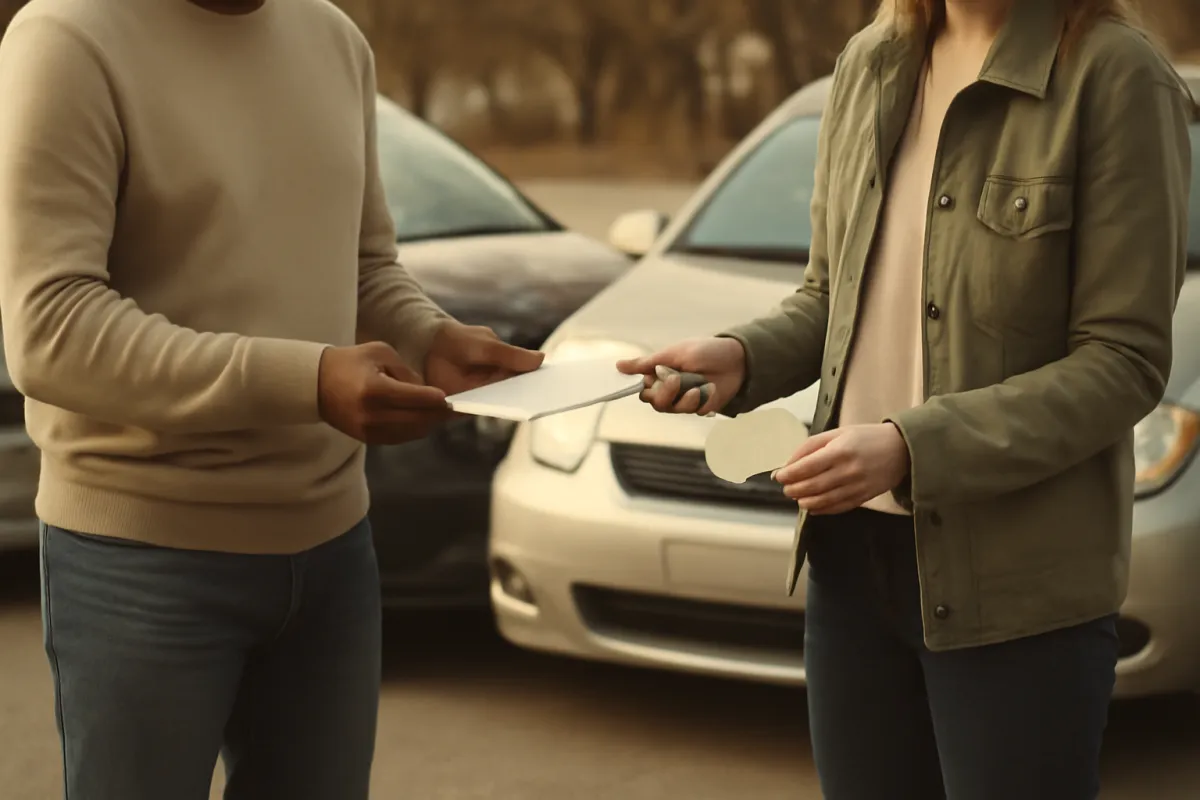
Alongside the formal request, there is a personal version anyone can do in the first hour. Screenshot your own ride history and receipt. Photograph the driver’s mounted phone if the screen is visible and it is safe to do so. Photograph any decal on the windscreen. Note the vehicle registration and the driver’s name as shown in your app. Our explainer on documenting an injury claim covers how the rest of the file gets built.
If you were the passenger
The passenger is usually in the strongest position in a rideshare crash, for a reason that has nothing to do with sympathy. A passenger in the back seat is almost never at fault for the collision, which removes the argument that reduces most other claims.
Coverage is also usually clearest. A passenger in the vehicle means period three was running, which means the larger commercial layer is the one in play. The passenger’s own trip record proves it.
What remains contested is who caused the crash and what the injuries are worth. If the rideshare driver caused it, the platform’s arranged coverage responds. If another motorist caused it, that motorist’s liability policy is the primary source, and the arranged coverage may still matter through its uninsured and underinsured motorist component if the other driver was uninsured or thinly covered. If both contributed, the claim can run against both, and the allocation between them is a question for the insurers rather than for the passenger.
Practical points specific to passengers. Report the collision through the app so a record exists on the platform’s side. Save the receipt and the trip detail immediately rather than assuming it will remain accessible. Seek treatment promptly, because a delay in a claim that is otherwise clean is the weakness an adjuster will find. And be careful about early recorded statements, for the reasons our explainer on dealing with an insurance adjuster sets out.
If you were driving the other vehicle
This is the position with the most uncertainty, because you have no visibility into the other driver’s app at all.
Your claim begins the way any collision claim begins, and our explainer on what to do after a car accident applies in full. The additional task is establishing whether the other driver was working, because that determines the size of the coverage behind them.
Signals available at the scene include a windscreen or dashboard decal, a phone mounted in a cradle with a map or driver screen visible, a passenger in the back seat who is plainly not a family member, and the driver’s own statement. Ask directly and without accusation whether they were on a trip. Note the answer with the time. If a passenger was present, get their contact details, because their trip record is independent proof.
Where the other driver was in period one, the coverage available may be modest, and your own uninsured or underinsured motorist coverage becomes central. Our explainer on uninsured motorist claims covers how that layer works, including the consent-to-settle traps that can void it.
Where the other driver was in period two or three, the coverage is substantial and the negotiation changes shape. A well-resourced defence will scrutinise fault closely, and a share of fault attributed to you reduces the recovery directly under the rules our explainer on comparative negligence sets out.
If you were a pedestrian or a cyclist
A pedestrian or cyclist struck by a rideshare vehicle has the same coverage question and a harder evidentiary position, because there is no exchange of information in the ordinary sense and the injuries are frequently serious enough that the injured person is not gathering anything at all.
The period structure applies identically. A driver carrying a passenger is in the larger layer. A driver waiting for a request is in the thin one. The difference in available money is the same order of magnitude, and the injuries in a pedestrian collision skew severe, which makes a low ceiling more likely to bind.
Two evidence sources carry disproportionate weight here. A passenger in the vehicle, if there was one, is both a witness and a holder of the trip record. And the crash report may note commercial use, a decal, or a passenger present, which is worth checking against your own recollection as soon as the report is available.
Your own auto policy may also respond even though you were walking, because uninsured and underinsured motorist coverage in many policies follows the insured person rather than the vehicle. Our explainer on pedestrian accident claims covers that route and the fault arguments that dominate these cases, and it is worth reading alongside this one rather than instead of it.
If you were the rideshare driver
A driver injured while working occupies the most awkward position in the structure, because the large commercial layer is generally third-party liability coverage. It protects people the driver harms; it is not a fund the driver claims from for their own injuries.
What may be available to an injured driver depends on the configuration. If another motorist caused the crash, that motorist’s liability policy is the primary source, and the uninsured or underinsured motorist component of the arranged coverage may respond during the working periods where the other driver was uninsured or underinsured. The driver’s own policy may respond for medical payments or personal injury protection depending on the state and the wording, though the livery exclusion can complicate that considerably.
Vehicle damage is a separate problem. Coverage for the driver’s own car during a working period frequently depends on the driver carrying collision coverage on the personal policy, and any platform-arranged physical damage protection typically carries a deductible of its own.
Lost income is the component drivers most often underestimate. Earnings are variable and are documented through the platform’s own statements, so the record of what a normal week looked like before the crash is worth assembling early rather than reconstructing later. The classification question also affects whether a workers compensation route exists at all, which varies by state and is worth a consultation rather than an assumption.

Uninsured and underinsured coverage inside the rideshare policy
The arranged coverage is usually more than a single liability limit. During the working periods it commonly includes an uninsured and underinsured motorist component, which exists for a specific and common scenario: a rideshare vehicle is struck by a third driver who has no insurance or has limits far below the harm caused.
Without that component, a passenger injured through no fault of the driver they were riding with would be left claiming against a minimum-limits policy, which is exactly the outcome the arrangement is designed to avoid. With it, the passenger has a second source once the at-fault driver’s limits are exhausted.
The mechanics follow the ordinary pattern for these coverages. The at-fault party’s liability limits are generally pursued first. The underinsured layer then addresses the shortfall between those limits and the value of the claim, often subject to an offset for what was already paid. Whether your own personal uninsured motorist coverage stacks on top, offsets, or is excluded is a matter of policy wording and state law, and the answers genuinely differ between states.
One procedural trap deserves emphasis. Many underinsured policies contain a consent-to-settle clause, meaning that accepting the liability insurer’s money and signing a release without written permission from the underinsured carrier can void the second claim entirely. Our explainer on uninsured motorist claims covers that in detail, and it is the single most expensive procedural mistake available in this area.
The independent contractor question
Rideshare drivers are commonly engaged as independent contractors rather than employees, and that classification sits underneath most of the structure described in this explainer.
The reason it matters to a claim is straightforward. The ordinary route for holding a company answerable for a worker’s conduct generally depends on an employment relationship. Where the worker is a contractor, that route is narrower, which is a large part of why the coverage arrangement exists in the form it does.
Claimants sometimes argue that the classification does not match the reality, pointing to the degree of practical control exercised over how the work is done. Whether that argument succeeds depends on the test applied in the particular state, on the facts of the particular arrangement, and on statutory changes that continue to be made in different places. This is genuinely unsettled and evolving ground, and this explainer will not pretend otherwise or predict where it lands.
There are also theories aimed at the platform’s own conduct rather than the driver’s, concerning matters such as screening or the design of the service, and those are separate from classification and equally fact-dependent.
The honest summary for someone with a claim is that the classification question is interesting, occasionally consequential, and rarely the fastest path to a recovery. It is a question for a licensed attorney in your state who knows how it is currently treated there.
Why suing the platform is harder than claiming on the policy
Given the choice between claiming against an insurance policy that exists precisely to respond and litigating a contested question of corporate responsibility, the first is generally the better route, and not by a small margin.
The arranged coverage is designed to pay. It has a claims process, an adjuster, a limit, and an obligation to respond. It does not require establishing anything about the platform’s own conduct or about employment classification. It requires establishing fault and damages, which is the ordinary work of any injury claim.
Direct claims against the platform involve additional layers of argument, additional defendants with substantial resources, and legal questions that are being answered differently in different states. They take longer, cost more, and carry more risk. There are cases where that route is worth exploring, typically where the harm exceeds the available coverage or where the allegation concerns the platform’s own conduct rather than the driver’s, but it is a considered strategic decision rather than a default.
There is also a contractual dimension. Users of these services typically agree to terms of service, and those terms may include arbitration provisions and other procedural requirements whose scope and enforceability differ by state and by claim type. Whether such a provision reaches a personal injury claim at all is a question for a licensed attorney reading the terms in force, not something to assume in either direction.
Comparative fault when three or more parties are involved
Rideshare collisions frequently involve at least three interested parties: the rideshare driver, another motorist, and a passenger with no fault at all. Sometimes a pedestrian or a second vehicle joins.
That multiplies the allocation question. States handle it differently. Some apply pure comparative fault, reducing a recovery by the claimant’s own percentage however high. Others apply modified comparative fault with a threshold, commonly described in illustrative terms around 50 or 51 percent, above which recovery is barred. A small number apply contributory rules that can bar recovery for any contribution at all. Our explainer on comparative negligence covers the mechanics.
Layered on top is how each state treats liability among multiple defendants: whether one partly responsible defendant can be liable for the whole loss, leaving them to recover contribution from others, or whether each answers only for its own share. Under the second rule, an uninsured party’s percentage may simply be uncollectable.
For a blameless passenger this is mostly someone else’s argument, though it can slow a resolution considerably while insurers dispute shares. For a driver of another vehicle it is the central battleground, because every percentage point attributed to you comes directly off the recovery. On an illustrative claim valued at $90,000, a 20 percent share removes $18,000 without anyone disputing a single medical record.
Who pays the medical bills while the coverage question is open
Liability claims settle once, at the end. The bills arrive throughout. That gap is the practical hardship in every injury claim, and a rideshare claim can widen it, because the coverage argument adds weeks or months before anyone accepts responsibility for paying anything.
Several sources commonly bridge it. Health insurance is the usual one, and it typically carries the treatment while reserving a right to be repaid from any settlement. In no-fault states, personal injury protection pays initial medical costs regardless of who caused the crash, though the livery exclusion question can arise for a working driver. Medical payments coverage on an auto policy provides a modest sum without a fault determination. And some providers will treat under a lien arrangement, waiting for the settlement rather than billing as they go.
None of these is free money. Health insurers, government programmes, and lien holders generally assert a right to recover from the settlement, which is why the headline number in a demand is not the number that reaches the claimant. Our explainer on who pays medical bills after an accident works through the sequence and the repayment mechanics.
The relevant discipline is to keep treating. A gap in treatment while waiting for a coverage decision harms both the recovery and the claim, and it is the most common self-inflicted weakness in an otherwise strong file.
How value is built once coverage is settled
When the coverage question is answered, valuation proceeds along the same lines as any injury claim, and the frameworks are covered elsewhere on TortWise rather than restated here.
Economic damages are the calculable part: treatment to date, anticipated future care, lost earnings, and reduced earning capacity where an injury has a lasting effect. Non-economic damages cover pain and the loss of normal life, and are the less mechanical component. Our explainer on calculating pain and suffering covers the methods, and the settlement range estimator applies the same multiplier logic to your own figures.
Illustratively, one common approach multiplies documented economic losses by a severity factor. Bands often described loosely run around 1.5 to 2 times for a minor injury that fully resolves, 2 to 3 times for a moderate injury with months of treatment, and 3 to 5 times or more for severe or lasting harm. Those multipliers are invented for illustration and bind no insurer.
The rideshare-specific point is the ceiling. A claim valued at an illustrative $90,000 is comfortably within a $1M layer and is a negotiation about the number. The same claim against a contingent layer capped at an illustrative $100,000 per accident, shared with anyone else injured in the same crash, may be constrained by coverage rather than by merit. A claim against a personal policy at an illustrative $50,000 per person is capped well below its value.
Illustrative split of a driver's time across a working shift
Invented proportions used to show why the thin-coverage phase is not a rare edge case. Real patterns vary enormously by city, time of day, driver, and demand.
The four shares sum to 100 and are invented for illustration. The structural point survives whatever the true proportions are: a substantial part of a working session sits in the phase with the least coverage behind it, which is why a crash involving a driver who was between trips is a common scenario rather than an unusual one.
A worked example across the periods
An illustrative sequence with invented figures, written to show the shape of the process rather than to predict any outcome.
A passenger is riding in the back of a rideshare vehicle when it is struck at an intersection. She is treated for a shoulder injury, undergoes several months of physical therapy, and misses six weeks of work. Documented economic losses come to an illustrative $30,000: roughly $22,000 in medical costs and $8,000 in lost earnings. On the bands above, a moderate injury with months of treatment suggests a range of 2 to 3 times that figure, or an illustrative $60,000 to $90,000.
Version one, passenger aboard. Period three was running. The trip receipt in her own account proves it. The commercial layer at an illustrative $1,000,000 is far above the claim value, so coverage never constrains the outcome and the negotiation is about fault and value alone.
Version two, the same crash between trips. The driver had dropped off a previous passenger ninety seconds earlier and had not accepted a new request, so period one applies. The contingent layer at an illustrative $100,000 per accident is above her $90,000 figure but only just, and if another occupant was also injured, the two claims share it. The cushion has vanished.
Version three, the app closed. The driver was off duty. The personal policy at an illustrative $50,000 per person caps recovery well below the claim’s value, and her own underinsured motorist coverage becomes the only route to the remaining $40,000.
Same injury. Same treatment. Same person at fault. Three very different outcomes, decided by something that was never visible from inside the car.

What to do in the first week after a rideshare crash
Get medical attention, immediately and regardless of how you feel. Adrenaline masks injury, and a gap between the crash and the first medical record is the weakness every adjuster looks for first.
Capture the app evidence while it is trivially easy. If you were the passenger, screenshot the trip receipt, the ride history entry, and the driver and vehicle details. If you were in another vehicle, photograph any decal, the mounted phone if the screen is visible, and the vehicle registration, and ask the driver directly whether they were on a trip.
Report the collision through the platform’s in-app process. This creates a record on their side and usually opens a claim file with the arranged insurer, which is the mechanism that gets the coverage question asked at all.
Do the ordinary things too. Obtain the crash report number and the report when it is available. Photograph the scene, both vehicles, the road, and any visible injuries. Collect witness contact details before people disperse.
Send or arrange a written preservation request covering trip identifiers, timestamps, GPS data, session logs, and in-app messages.
Start a short dated note of symptoms and limitations. Two lines a day is enough, and it supports the non-economic side of the claim far better than a reconstruction a year later. Our explainer on documenting an injury claim covers what else belongs in the file.
What the insurer will try early
Early conduct in a rideshare claim follows recognisable patterns, and recognising them is most of the answer to them.
The coverage position comes first. Expect a period during which the applicable policy is described as under investigation, and expect it to take longer than it would in a two-car collision. That is often genuine rather than tactical, but it has the same effect on someone with bills arriving.
A recorded statement request usually arrives early, before the medical picture is clear, and in these claims it will include questions about the app. Answering factually about what you observed is different from speculating about what period was running or characterising a recovery that has not happened.
A quick offer often appears where injuries look moderate, and it is most attractive at the moment you know least about your own recovery. Our explainer on whether to accept a first settlement offer covers why the timing of an offer is itself information.
Comparative fault arguments arrive quickly against anyone who was driving, because a share attributed to you reduces exposure directly. Disputes about the mechanism of injury follow, particularly where imaging shows the degenerative changes most adults have.
None of this is bad faith. It is a well-resourced party doing its job, and our explainer on dealing with an insurance adjuster covers how those conversations are structured.
Common mistakes in rideshare claims
Accepting the personal insurer’s denial as the end of the claim. It is usually the start of the coverage analysis rather than its conclusion.
Assuming the large commercial figure applies because the word rideshare was involved. The applicable period decides that, and a driver between trips sits in a much smaller layer.
Failing to capture the trip record in the first hours. A passenger’s own receipt is the cleanest proof of app status available anywhere, and it costs nothing to screenshot at the scene.
Not reporting through the app. Without a report on the platform’s side, the arranged insurer may not open a file at all, and the claim stalls before it starts.
Speculating about app status in a recorded statement. Describe what you saw. The timestamps will establish the rest.
Signing a release from the liability insurer before checking a consent-to-settle requirement in an underinsured policy. This can void the second claim entirely.
Letting treatment lapse while waiting for a coverage decision. The gap harms the recovery and the file at the same time.
Assuming the deadline is far away. Filing periods vary considerably by state and by claim type, and our explainer on how long you have to file an injury claim covers why that is worth confirming early rather than late.
When representation is worth the consultation
TortWise does not tell everyone they need a lawyer, and on small clear claims we have said the opposite. Rideshare claims sit in the middle, and the deciding factor is usually whether the coverage question is contested.
Where it is straightforward, meaning a passenger with a trip receipt, clear fault, and a minor injury that resolved, handling it directly is realistic. The process is the ordinary claim process our explainer on filing a car accident claim describes.
Where it is contested, the calculus changes. Two insurers pointing at each other, a disputed app status, a driver between trips, an injury requiring surgery or with any prospect of lasting effect, a fatality, or a claim whose value approaches the available limits are all situations where the specialised knowledge matters and the evidence needed sits with parties who respond to formal process rather than to requests.
Consultations are commonly free, and injury representation typically works on a contingency arrangement, so the cost question is about the percentage rather than about an upfront bill. Our explainer on contingency fees covers how those arrangements are structured, our note on whether you need a lawyer for a car accident works through the judgement, and our explainer on finding a personal injury lawyer covers the search.
Taking a consultation costs a morning and is worth it if only to establish what applies where you live.
Questions worth asking at a first consultation
Which period do you think applied here, and what evidence would establish it?
Has a preservation request gone out to the platform, and what should it cover in this case?
What coverage do you expect to be available, and what happens if the claim is worth more than the applicable limit?
Does my own uninsured or underinsured motorist coverage apply here, and does it stack, offset, or exclude in this state?
Is there a consent-to-settle requirement in any policy I hold, and what do I need to do before signing anything?
How does this state currently treat the employment classification question, and does that change what you would advise?
What is the filing deadline here, and does anything shorten it?
How do you charge, what percentage applies at each stage, and how are case costs treated separately from the fee?
What is a realistic timeline, and what are the decision points along the way?
Ask the same questions of more than one firm. The answers vary, and the variation is informative.
The bottom line
A rideshare accident claim is an ordinary injury claim wrapped around an extraordinary coverage question. Fault, treatment, documentation, and valuation all work the way they work in any collision, and the frameworks for each are covered elsewhere on TortWise. What is unique here is that the amount of insurance standing behind the claim is set by what the driver’s app was doing at the moment of impact, and that answer can move the available coverage by a factor of ten or twenty on identical facts.
The structure to hold in mind is the phase pattern: app closed means the personal policy alone, app open and waiting means a thin contingent layer, and en route or carrying a passenger means a much larger commercial one. The amounts and the boundaries are set by each platform’s current terms and by your state, not by any figure in this explainer.
Three actions follow from all of it. Capture the app evidence immediately, because it is the cheapest thing to preserve and the most expensive thing to lose. Treat a personal-policy denial as information rather than as a rejection. And check your own uninsured and underinsured coverage, because it is the layer that decides what happens when the applicable period turns out to be the thin one. Then put the specific question of your claim to a licensed attorney in your state, who can tell you how these rules are currently applied where you live.
Written in our own words for this explainer: everything above describes how rideshare coverage arrangements are commonly structured so that you can ask sharper questions, and that is the entire extent of its purpose. TortWise is an informational publisher rather than a law firm, nothing here is legal advice, and reading it creates no attorney-client relationship of any kind. No rideshare platform is named anywhere in this article and no figure quoted is any company’s actual policy term; every dollar amount, limit, percentage share, multiplier and worked example is invented to illustrate a structure and should never be treated as a quotation, a forecast, or a promise. Coverage arrangements, period boundaries, endorsement availability, shared-fault rules, filing deadlines and the treatment of worker classification all differ between states and are revised over time, so the terms actually in force on the day of your collision and the law of your own state are what govern. Confirm both with a licensed attorney in your state, and confirm your own policy wording with your insurer, before relying on anything written here.
Frequently asked questions
Whose insurance pays after a rideshare accident?
It depends on what the driver's app was doing at the moment of impact, which is the single feature that separates these claims from ordinary collisions. The pattern most platforms follow, in general terms, is that a driver with the app closed is covered only by their own personal auto policy, a driver with the app open and waiting for a request falls under a limited contingent layer arranged by the platform, and a driver who has accepted a request or has a passenger in the car falls under a much larger commercial policy. Amounts, naming, and availability differ by platform and by state, and the terms in force on the day of your crash govern rather than any figure quoted in an article. The practical consequence is that establishing app status early is not a detail; it decides how much money exists to pay a claim.
What are the rideshare insurance periods?
They are the phases of a driver's working session, and the industry commonly numbers them from zero to three, though the labels vary. Period zero is the app closed, when the driver is a private motorist on a personal policy. Period one is the app open with no request accepted, when a contingent liability layer typically responds and the limits are usually modest. Period two begins when a request is accepted and the driver is travelling to the pickup point. Period three runs from the moment the passenger is in the vehicle until they are dropped off. Periods two and three are commonly grouped together at the same, much higher, limit. Nothing about that structure is a legal rule; it is a common contractual pattern that each platform sets and revises.
Can I claim if the driver's personal insurer denies the claim?
A denial by the personal insurer is a common and often expected step rather than the end of the matter. Most standard personal auto policies contain a livery or public conveyance exclusion, which is why the personal insurer typically declines once it establishes that the driver was working. That denial is frequently the event that redirects the claim toward the platform's arranged coverage, because those layers are designed to sit precisely where the personal policy stops. Getting the denial in writing, with the reason stated, is worth doing rather than treating it as a defeat. If the personal insurer and the platform's insurer each point at the other, that dispute is a strong signal to take a consultation with a licensed attorney in your state.
How much is a rideshare accident claim worth?
There is no average worth quoting, and any figure offered in the first weeks is guesswork. Value is assembled the same way as in any injury claim: documented economic losses, meaning treatment to date, anticipated future care, lost earnings, and reduced earning capacity, plus a non-economic component for pain and disruption. One common illustrative approach multiplies documented economic losses by a severity factor, with bands often described loosely as around 1.5 to 2 times for a minor injury that resolves, 2 to 3 times for a moderate one, and 3 to 5 times or more for severe or lasting harm. Those multipliers are invented for illustration and bind nobody. What is distinctive about a rideshare claim is that the coverage ceiling above the case can shift by an order of magnitude depending on app status, so the same injury can produce very different outcomes.
What evidence proves the app status at the moment of the crash?
The decisive records sit on the platform's servers and on the phones involved, not at the roadside. Trip identifiers, the timestamps for request acceptance, pickup, and drop-off, GPS breadcrumb data, and the driver's session log all speak directly to which period was running. A passenger usually has the strongest independent copy, because their own trip receipt and ride history sit in their own account. Photographs of the driver's mounted phone screen at the scene, any decal on the windscreen, and the crash report notation about commercial use all help corroborate it. Because these records are held by parties with no obligation to preserve them for you, a written preservation request early is worth more than an argument later.
Does my own uninsured motorist coverage help after a rideshare crash?
Often yes, and in several different configurations depending on who you were. If you were a passenger and the at-fault party was a third driver with no insurance or thin limits, the platform's arranged coverage commonly includes an uninsured and underinsured motorist component during the working periods, and your own policy may also respond. If you were driving another vehicle, your own uninsured or underinsured motorist coverage is the layer that fills a gap left by a driver with minimum limits. Whether these layers stack, offset against each other, or exclude one another is governed by policy wording and by state law, and the answers differ meaningfully between states. Our explainer on uninsured motorist claims covers the mechanics, and a licensed attorney in your state can confirm what applies to you.
Can I sue the rideshare company directly?
It is usually harder than claiming against the arranged coverage, which is why most claims proceed against the policy rather than the platform. Rideshare drivers are commonly engaged as independent contractors rather than employees, and the ordinary route for holding a company answerable for a worker's conduct generally depends on an employment relationship. Claimants sometimes argue that the practical control exercised over drivers makes the classification inaccurate, or advance separate theories aimed at the platform's own conduct rather than the driver's, and the treatment of those arguments varies by state and continues to develop. None of that is settled ground and none of it should be assumed. The arranged coverage exists in part because that direct route is uncertain, and it is generally the faster and more reliable path to a recovery.
What should I do in the first week after a rideshare crash?
Get medical attention even if you believe you can walk it off, because a gap between the crash and the first medical record is the most common evidentiary weakness in any injury claim. Then capture the app evidence while it is easy: screenshot your own trip receipt and ride history if you were the passenger, photograph the driver's mounted phone and any windscreen decal, and note the trip identifier. Report the collision through the platform's in-app process so a record exists on their side, and obtain the crash report number. Collect witness contact details before people disperse. Keep a short dated note of symptoms from the start, since that contemporaneous record supports the non-economic side of a claim far better than a reconstruction months later.

Hamza Hai is the editor of TortWise. She holds an MBA and reviews the site's articles against our editorial standards, checking that every figure is labelled for what it is, that nothing is presented as verified fact without a source the reader can check, and that the writing stays useful to a non-specialist.