
What's on this page
- The three routes to a replacement car
- What loss of use actually means
- The gap between the crash and the authorisation
- Using your own coverage instead
- How long the entitlement lasts
- The total loss squeeze
- Self-funding a rental sensibly
- Two meanings of “no fault”, and why it matters here
- Who ends up paying, in practice
- If the other driver is uninsured or underinsured
- If you were partly at fault
- Rental counter add-ons, and what to decline
- Business vehicles and specialist needs
- Where a rental claim sits in the wider claim
- When the other insurer is not cooperating
- A worked example, day by day
- Questions worth asking early
- Common mistakes
- Choosing where to have the car repaired
- Going without a car instead
- What to gather in the first hour
- Why insurers push back on rental duration
- The bottom line
Short answer: After a not-at-fault accident, a rental car is usually the at-fault driver's insurer's responsibility, but only once it accepts liability, which takes days rather than hours. In the gap you have two other routes: your own rental reimbursement coverage, which pays immediately but has daily and total limits, or paying for a comparable rental yourself and claiming it back with receipts. On a total loss the rental usually ends days after the offer.
Being hit by someone else leaves you with a damaged car and an immediate practical problem: you still need to get to work tomorrow. The insurance answer is that the at-fault driver’s insurer should cover a replacement vehicle, and the practical answer is that this often takes longer to arrange than you have.
This explainer covers who actually pays, what loss of use means, how long the entitlement lasts, and what to do in the gap between the crash and the other insurer accepting responsibility. TortWise is a plain-English publisher rather than a law firm, so this is orientation rather than advice about your claim.
Key takeaways
- The at-fault insurer is usually responsible, but only once it accepts liability, which takes days rather than hours.
- Your own rental reimbursement coverage is faster but has daily and total limits.
- Loss of use is a separate recoverable item from the repair itself.
- On a total loss the rental usually ends days after the offer, not when you receive the money.
- Self-funding a rental is workable if you keep receipts and rent something comparable, not an upgrade.
The three routes to a replacement car
There are only three, and knowing which you are on prevents most of the confusion.
The at-fault driver’s liability insurance. This is the route that costs you nothing and uses none of your own coverage. It requires that insurer to accept responsibility first, which is the delay.
Your own rental reimbursement coverage. An optional add-on on many policies, usually with a daily cap and a maximum number of days. It pays immediately without waiting for a liability decision, and your insurer will typically pursue the other side afterwards.
Paying yourself and claiming it back. Always available, sometimes the only option, and entirely dependent on documentation.
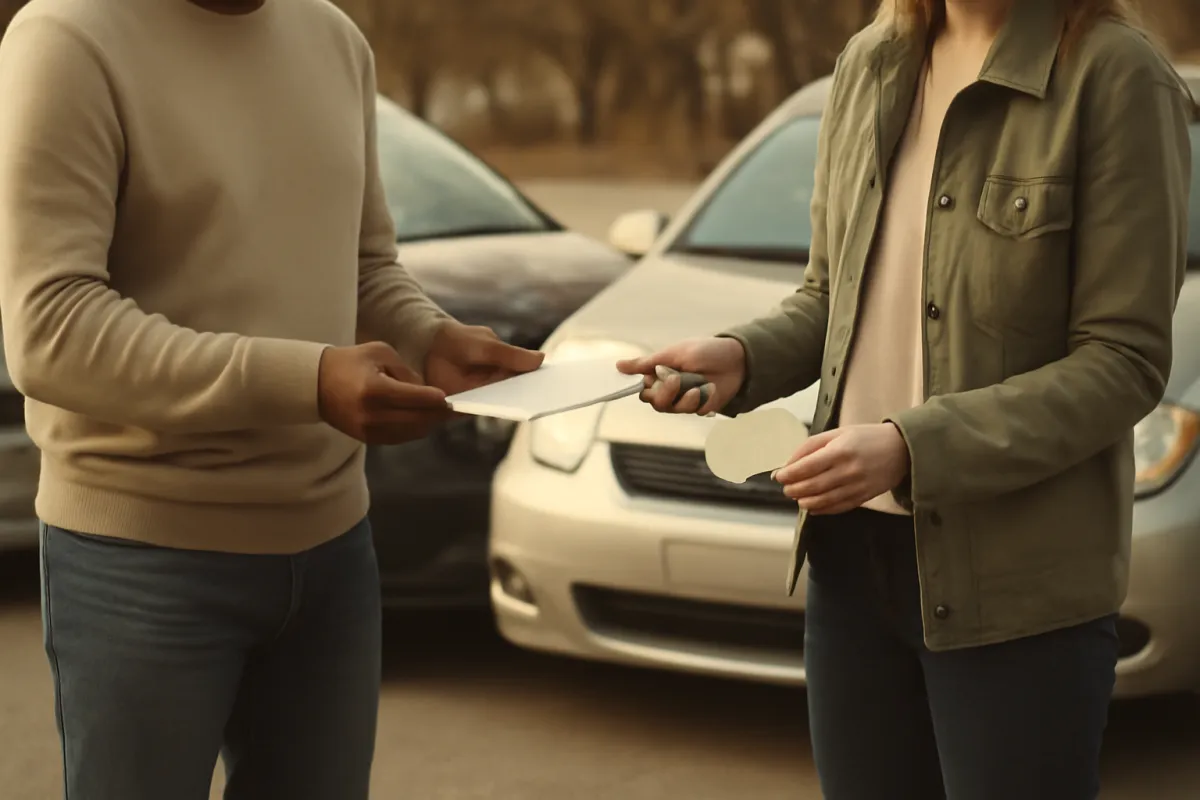
Which route is best depends less on entitlement and more on how quickly you need a car. Our explainer on what to do after a car accident covers the scene documentation that speeds all three up.
What loss of use actually means
Loss of use is the legal concept underneath the rental. It recognises that being deprived of your vehicle is itself a loss, separate from the cost of fixing it.
That distinction matters in two ways. First, it means the entitlement does not depend on you actually renting a car. In some jurisdictions you can claim a cash amount for loss of use even if you managed without a vehicle, calculated from a reasonable daily rate over a reasonable period. Second, it means the measure is what was reasonable rather than what you spent. Renting a vehicle substantially better than your own is unlikely to be fully reimbursed.
Insurers approach loss of use by arguing for the shortest reasonable period and the lowest reasonable class of vehicle. That is their job, and it is why documentation of the actual repair timeline carries more weight than a general complaint about delay.
Whether loss of use is recoverable at all, and how it is calculated, varies between jurisdictions. It is one of the areas where a general description is least reliable and local rules matter most.
The gap between the crash and the authorisation
This is the part that surprises people, and it is worth understanding as a process rather than as an obstruction.
When you notify the other driver’s insurer, it opens a claim and begins investigating liability. It will typically want its own insured’s account of what happened, and until it has that, it will usually not authorise anything. If its insured is slow to respond, unreachable, or gives a conflicting account, the delay extends.

Three things shorten this. A police or incident report supporting your account. Photographs from the scene showing vehicle positions and damage. And an independent witness, which is the single most effective way to resolve a disputed account quickly.
Where liability is genuinely clear, a rear-end collision or being struck while stationary, acceptance is usually quicker. Our explainer on rear-end collision claims covers why those are typically the most straightforward.
Using your own coverage instead
Rental reimbursement is an optional coverage many drivers carry without knowing the detail.
It typically pays a fixed amount per day up to a maximum number of days or a total sum. Illustrative figures often cited sit somewhere around $30 to $50 a day with a cap around 30 days, though limits vary considerably and yours are printed in your policy declarations.
The advantage is speed. It does not wait for anyone to accept fault.
The limitations are the daily cap, which may not cover a comparable vehicle if you drive something large, and the day limit, which can expire during a long repair.
Afterwards, your insurer will normally pursue the at-fault insurer for what it paid, a process called subrogation. If you paid a deductible on a related collision claim, it is generally refunded when that recovery succeeds, though the timeline can be long.
Using your own coverage does mean opening a claim on your policy. How insurers treat not-at-fault claims varies, so it is worth asking yours directly rather than assuming a surcharge either way.
How long the entitlement lasts
For a repairable vehicle, the general standard is the actual repair period plus a reasonable allowance for scheduling.
Two situations complicate that. Parts delays, which are outside your control and outside the shop’s, are still your loss and are generally recoverable, but you need the shop to document the cause. Supplements, where hidden damage is discovered once the vehicle is disassembled, extend the repair and require the insurer to approve additional work, which adds days.
Illustrative rental periods by scenario
Illustrative durations to show the shape of the timeline. Actual periods depend on damage, parts availability, and the insurer's authorisation.
The bottom bar is the one that catches people. A total loss can end the rental faster than a moderate repair, because the clock starts when the offer is made rather than when the vehicle is replaced or the valuation is agreed.
The total loss squeeze
When the insurer decides your car is not economical to repair, the rental arrangement changes character abruptly.
Instead of running until the vehicle is fixed, it typically runs for a defined and short period after the insurer makes its settlement offer. Commonly cited illustrative allowances are a handful of days.
The difficulty is that the offer and the payment are separate events, and the valuation is frequently negotiated. You can be disputing a figure you consider too low while the rental clock runs down, which creates real pressure to accept.
Understanding this in advance is the useful part. If a total loss looks likely, based on the visible damage and the age of the vehicle, start researching replacement values and looking at vehicles before the offer arrives rather than after. That converts a five-day scramble into a decision you have already partly made.
It is also worth knowing that the valuation itself is negotiable and should reflect comparable local vehicles rather than a generic figure. Our explainer on dealing with an insurance adjuster covers how those conversations tend to run.
Self-funding a rental sensibly
If you have no rental coverage and the other insurer has not authorised anything, paying yourself is a legitimate route, provided you do it in a way that survives scrutiny.
Rent something comparable to your own vehicle. An upgrade is the most common reason a reimbursement is reduced.
Keep every receipt and the rental agreement showing dates, class, and daily rate.
Document why the rental was necessary and why it lasted as long as it did, which usually means keeping the repair shop’s paperwork including any parts delay notes.
Notify the at-fault insurer in writing that you are renting at your own cost and intend to claim it, rather than presenting the bill afterwards without warning.
Return the vehicle promptly once yours is available. Days after the repair is complete are rarely recoverable.

Two meanings of “no fault”, and why it matters here
The phrase does double duty, and the difference changes the answer.
Colloquially, a no-fault accident means one you did not cause. That is the sense most people mean when searching, and everything above applies: the responsible party’s insurer covers your losses.
Legally, a no-fault state is one where each driver’s own insurance pays their medical expenses regardless of who caused the crash, through personal injury protection coverage. Around a dozen states operate some version of this, with the details differing considerably between them.
The critical point is that no-fault rules generally apply to injury claims, not to vehicle damage. Property damage, including repairs and loss of use, typically remains fault-based even in a no-fault state. So living in one does not usually mean you claim your rental from your own insurer by default; the at-fault driver’s property damage liability coverage still applies.
Where no-fault does affect you is on the injury side, where your own personal injury protection coverage pays medical bills first, often with thresholds governing when you can step outside the system to claim against the other driver.
The practical takeaway is not to assume that because your state is no-fault, the vehicle question is settled by your own policy. Confirm how property damage is handled where you live, because it is one of the more commonly misunderstood distinctions in this area.
Who ends up paying, in practice
Illustrative routes to a paid rental
An illustration of how these claims tend to be funded, not measured data. The distribution shifts with how quickly liability is accepted.
The route matters less than the timing. All three usually end with the at-fault insurer bearing the cost; they differ in how long you wait and how much documentation you need to keep.
If the other driver is uninsured or underinsured
This changes the calculation entirely, and it is more common than people expect.
If the at-fault driver has no insurance, there is no liability policy to pay for anything. Your options narrow to your own coverages: collision coverage for the repair, rental reimbursement for the replacement vehicle, and uninsured motorist coverage where you carry it, which in some states extends to property damage and in others is injury only.
If the other driver is insured but carries minimum limits, those limits may be consumed by the repair itself, leaving nothing for loss of use, particularly where several vehicles were involved.
Pursuing an uninsured driver personally is theoretically possible and practically difficult. Someone who could not afford insurance is rarely able to satisfy a judgment, and the cost of pursuing one frequently exceeds the recovery.
The useful preparation happens before any of this: knowing whether you carry uninsured motorist property damage coverage, collision coverage, and rental reimbursement. Those three determine your position when the other side turns out to have nothing. It is worth checking your declarations page while nothing has happened rather than discovering the gaps afterwards.
If you were partly at fault
Few collisions are entirely one-sided, and shared responsibility affects the rental as it affects everything else.
Under comparative fault rules, your recovery is generally reduced by your share of responsibility. If you are found 20 percent responsible, you would typically recover 80 percent of your loss of use alongside 80 percent of your other damages.
Some states apply a threshold, commonly cited around 50 or 51 percent, above which recovery is barred entirely. A small number apply stricter contributory negligence rules.
The practical effect on a rental is awkward, because rentals are authorised or not rather than partially authorised. In a disputed liability case the at-fault insurer often declines to authorise anything until apportionment is settled, which pushes you toward your own coverage in the meantime.
Being told you may be partly responsible early in a claim is not the same as it being established. Initial assessments change with evidence, and an insurer’s opening position on apportionment is a position rather than a finding.
Rental counter add-ons, and what to decline
Once you reach the rental desk there is a second set of decisions, and they are not covered by the accident claim.
The collision damage waiver on the rental is the main one. If you carry collision coverage on your own policy it frequently extends to a rental vehicle, and some credit cards provide secondary or primary coverage when the rental is paid with that card. Buying the waiver on top of coverage you already hold is the most common unnecessary expense at the counter.
Supplemental liability, personal accident, and personal effects coverage each duplicate something most drivers already carry through auto or home insurance.
Fuel prepayment is almost always more expensive than refuelling yourself.
Upgrades are the trap specific to this situation. An insurer authorising a mid-size will pay for a mid-size, and the difference on an upgrade is yours.
Check your own policy and card benefits before you arrive rather than deciding under pressure at a counter, because the counter is not a neutral place to evaluate insurance you may already have.
Business vehicles and specialist needs
Where the damaged vehicle did more than commute, the standard rental answer fits badly.
A vehicle used for work has a loss of use measured by what its absence actually cost, which may be lost income rather than a rental rate. A tradesperson whose van carried tools and stock cannot substitute a sedan, and a claim limited to a sedan rental understates the loss.
Specialist and adapted vehicles present the same problem more acutely. A wheelchair-accessible vehicle, a vehicle with hand controls, or one adapted for a specific need has no ordinary rental equivalent, and insurers can be slow to engage with that unless it is stated explicitly and early.
Towing capacity, passenger count, and cargo requirements are all legitimate grounds for a class above the default, and all are more persuasive documented in advance than argued afterwards.
In these situations a cash loss of use claim, calculated from the real cost of the disruption, is frequently more appropriate than a rental. That is a more complex claim to present, and it is one where professional help earns its keep.
Where a rental claim sits in the wider claim
The rental is one line in a claim that may include several others, and it is usually the smallest.
The repair cost or total loss settlement is the main property element. Diminished value, the reduction in your vehicle’s resale value because it now has an accident history, is a separate item that many drivers never claim at all.
If anyone was injured, that is a distinct claim with its own timeline, and it usually resolves long after the vehicle question is settled. Our explainers on what a personal injury claim is worth and how long a settlement takes cover that side.
Keeping the two separate in your own mind is useful, because insurers sometimes present a single figure that resolves everything, and accepting a property settlement should not require signing away an injury claim. Read what any release covers before signing it.
When the other insurer is not cooperating
A slow response in the first week is usually process rather than obstruction. A continued refusal once liability appears clear is a different matter.
Escalate in writing. A written request creates a record and frequently produces a faster response than repeated calls.
Ask specifically what is outstanding. If the answer is that their insured has not responded, that is useful information and changes your options, because waiting indefinitely on an unresponsive third party is not reasonable.
Use your own coverage in the meantime if you have it. Getting mobile is more important than winning the argument about who pays, and subrogation exists precisely to sort that out afterwards.
Keep a dated log of every contact, including who you spoke to and what was said. Our note on documenting an injury claim applies equally to the property side.
And where a refusal persists despite clear liability, or where the amounts involved are significant, that is a reasonable point to consult a licensed attorney in your state rather than continuing alone.
A worked example, day by day
An illustrative sequence, written to show the shape of the timeline rather than to predict any claim.
Day 0. A driver is struck from behind at a junction. Both cars are drivable but hers has significant rear damage. She photographs both vehicles, the position on the road, and the other driver’s insurance details, and obtains an incident number.
Day 1. She notifies the other driver’s insurer and opens a claim. She is told liability cannot be confirmed until their insured has been contacted. She also checks her own declarations page and finds she carries rental reimbursement at an illustrative $40 a day for up to 30 days.
Day 2. Rather than wait, she opens a claim under her own rental coverage and collects a mid-size sedan comparable to her own car. She declines the collision damage waiver at the counter because her own collision coverage extends to rentals, and confirms this with her insurer by phone before declining.
Day 4. The other insurer accepts liability after speaking with its insured, whose account matches hers. Her insurer notes it will pursue recovery.
Day 6. The body shop’s estimate is approved and repairs begin.
Day 11. Disassembly reveals hidden damage to a reinforcement bar. The shop submits a supplement, which the insurer takes three days to approve. She asks the shop to document the delay and its cause in writing.
Day 19. A replacement part is back-ordered. Again, she asks for written confirmation of the cause, because this is the sort of delay an insurer later questions.
Day 27. Repairs complete. She returns the rental the same day rather than the following morning.
Weeks later. Her insurer recovers its outlay from the at-fault insurer and refunds her collision deductible. She separately raises a diminished value claim, since the vehicle now carries an accident history on its record.
Change one variable and the story is worse. Without rental reimbursement she would have spent four days without a car waiting for a liability decision, then either self-funded or gone without for 27 days. The coverage did not change who ultimately paid. It changed whether she had transport while that was decided.
Questions worth asking early
Ask your own insurer whether you carry rental reimbursement, what the daily limit is, how many days it runs, and whether a not-at-fault claim affects your rates.
Ask whether your collision coverage extends to a rental vehicle, so you can decline the counter waiver with confidence.
Ask the at-fault insurer what specifically is outstanding before liability can be accepted, and get the answer in writing.
Ask the body shop for a written repair timeline at the start and for written notes on any delay and its cause.
Ask the insurer, if a total loss looks likely, exactly how many days of rental are allowed after an offer, so the clock is not a surprise.
And ask whether the release you are being asked to sign covers property damage only, or injury as well.
Common mistakes
Waiting for authorisation while having no transport, when your own rental coverage would have had you mobile the same day.
Renting an upgrade because the rental company offered one, then discovering the insurer will only reimburse a comparable class.
Assuming the rental runs until you have replaced a totalled car, when it typically ends days after the offer.
Failing to document parts delays at the time, which converts a recoverable extension into an argued one.
Keeping the rental for a day or two after the repair is finished, which is rarely reimbursed and easy to avoid.
Signing a property damage release without checking whether it also releases an injury claim, which is irreversible once done.
Not claiming diminished value, which is frequently worth more than the rental and is routinely overlooked.
Buying the collision damage waiver at the rental counter when your own collision coverage or your credit card already extends to rentals, which is the most common avoidable cost in the whole process.
Choosing where to have the car repaired
The rental period depends on the repair, so the shop decision affects the rental more than people expect.
You generally have the right to choose your own repairer rather than being required to use one from the insurer’s network, though the rules and the practical pressure vary by state. Insurers often steer toward network shops, which is not automatically against your interests: those shops typically have direct billing arrangements and pre-agreed rates, which can mean fewer approval delays and therefore a shorter rental.
The trade-off is independence. A shop with a volume relationship with an insurer has an incentive to keep estimates lean, which can mean pressure toward repairing a panel rather than replacing it, or using aftermarket rather than original parts. Whether that matters depends on the vehicle and on how long you intend to keep it.
Two questions predict the rental duration better than any promise about quality. First, does the shop have capacity to start now, or is there a queue before work begins? A vehicle sitting in a lot waiting its turn is generating rental days without progress. Second, how does the shop handle supplements, since the approval cycle on hidden damage is where most repairs lose a week.
Whichever you choose, get the estimated completion date in writing at the start and ask to be told promptly when it changes. That documentation is what supports a longer rental period if the insurer questions it later.
Going without a car instead
Not everyone wants a rental, and choosing not to take one does not necessarily mean giving up the claim.
In jurisdictions that recognise loss of use as a cash item, you may be able to claim a reasonable amount for the period you were deprived of your vehicle even though you did not rent. The calculation typically starts from a reasonable daily rental rate for a comparable vehicle over a reasonable period, and it usually requires evidence of both.
This suits people who worked from home during the repair, had a second household vehicle, or managed on public transport. It converts an inconvenience you absorbed into a recoverable amount rather than leaving it uncompensated.
Two cautions apply. Not every jurisdiction recognises the claim in cash form, and insurers resist it more firmly than they resist a rental invoice, precisely because there is no receipt. Documentation therefore matters more, not less: the repair timeline, the daily rate for a comparable vehicle, and a record of the actual disruption.
There is also a middle position worth knowing about. Using rideshare, public transport, or a temporary arrangement and claiming those actual costs is often simpler to evidence than a notional daily rate, because receipts exist. Where the total is lower than a rental would have been, insurers rarely dispute it.
The decision is genuinely yours. What is not sensible is absorbing weeks of disruption silently and only realising afterwards that it was a recoverable part of the claim.
What to gather in the first hour
Almost every delay described in this article traces back to something missing from the first hour, so it is worth being specific about what to collect.
The other driver’s full name, address, phone number, insurer, and policy number. A photograph of their insurance card and licence is faster and more accurate than writing it down.
The vehicle registration and make of every vehicle involved, including any that left the scene.
Photographs from several distances: the overall scene showing final positions, mid-range showing the relationship between vehicles, and close-ups of every damaged area on both cars. Photograph your own undamaged panels too, because that pre-empts arguments about pre-existing damage.
The police or incident report number, and the attending officer’s name where one attends.
Contact details for any independent witness. This is the single item most often skipped and the one that most reliably resolves a disputed liability decision quickly, which in turn is what gets a rental authorised.
Road conditions, weather, lighting, and any obstruction, photographed rather than remembered.
Your own mileage and the vehicle’s condition, which matters if a total loss valuation becomes contested.
None of this takes long, and all of it is easier at the scene than reconstructed later. Our step-by-step guide on filing a car accident claim covers what happens next.
Why insurers push back on rental duration
Understanding the other side’s incentives makes the pushback less baffling and easier to answer.
Loss of use is one of the few claim components that grows purely with time. A repair estimate is a fixed number once agreed; a rental accrues every day the vehicle is unavailable. An insurer managing thousands of claims therefore treats rental days as the most controllable line on the file.
That produces three predictable behaviours. Authorising a class below the damaged vehicle, on the reasoning that any working car restores mobility. Setting an initial authorisation period based on the estimate rather than on the actual repair, so extensions require fresh approval. And querying any period where the vehicle was at a shop but not being worked on.
None of these is unreasonable in principle. A claimant is expected to mitigate loss rather than let it run, and days spent waiting because nobody chased the shop are genuinely arguable.
What the behaviours mean in practice is that documentation beats argument. An insurer questioning eight extra days will usually accept a written note from the shop attributing them to a back-ordered part, and will usually not accept a general complaint that the repair took longer than expected.
The corollary is that your own promptness matters. Returning the rental the day repairs finish, responding quickly to approval requests, and chasing the shop yourself all remove the arguments an insurer would otherwise have.
The bottom line
If the accident was not your fault, the other driver’s insurer is generally responsible for a reasonable replacement vehicle for a reasonable period. The entitlement is rarely the hard part. The timing is.
Get mobile first and settle the payment question second. Those two things are separable, and treating them as one is what leaves people stranded for a week waiting on a decision that was always going to arrive eventually. If you carry rental reimbursement, use it and let the insurers sort out recovery between themselves. If you do not, self-fund something comparable, document everything, and tell the at-fault insurer in writing what you are doing.
And if the damage looks severe enough that a total loss is likely, start looking at replacement vehicles immediately. The rental clock on a total loss is shorter than almost anyone expects, and it begins at the offer rather than at the cheque.
One last thing worth knowing before you need it. The single most useful preparation for all of this happens on an ordinary day, not after a collision: reading your own declarations page to find out whether you carry rental reimbursement, whether your collision coverage extends to rentals, and whether you have uninsured motorist property damage cover. Those three answers determine how quickly you get moving again, and every one of them is easier to establish now than from the roadside.
A closing word in our own voice: TortWise publishes plain-English explainers and is not a law firm or an insurance broker. This article describes how rental and loss of use claims generally work after a not-at-fault collision, and that is the whole of what it does. It is not legal or insurance advice, it creates no attorney-client relationship, and it cannot account for the fault rules, no-fault statutes, coverage requirements, loss of use standards, and total loss regulations that differ from one state to the next. Every day count, daily rate, and duration above is a rounded illustration used to show the shape of the timeline rather than an entitlement, and your own policy documents govern what your coverage actually provides. Confirm your position with your insurer, and consult a licensed attorney in your jurisdiction where liability is disputed or the amounts involved are significant.
Frequently asked questions
Who pays for a rental car when the accident was not my fault?
In most situations the at-fault driver's liability insurer is responsible for the reasonable cost of a replacement vehicle while yours is being repaired or, if it is a total loss, for a reasonable period after the settlement offer. That right generally comes from the concept of loss of use, meaning the loss of your ability to use the vehicle you owned. The practical complication is timing: the other insurer usually will not authorise a rental until it has accepted liability, and that acceptance can take days or longer. Until then you either wait, pay and seek reimbursement, or use your own rental reimbursement coverage if you carry it. Rules and entitlements vary by state, so confirm your own position rather than relying on a general description.
What is loss of use in an insurance claim?
Loss of use is the recognised loss you suffer from being deprived of your vehicle while it is unusable because of someone else's negligence. It is a separate item from the repair cost itself. In practice it is usually satisfied by the at-fault insurer paying for a comparable rental, but in some cases it can be claimed as a cash amount instead, calculated from a reasonable daily rate for the period you were without the car. The insurer will generally argue for the shortest reasonable period and the lowest reasonable class of vehicle, which is why documentation of repair timelines matters. Whether loss of use is recoverable, and how it is measured, differs between jurisdictions.
How long can I keep a rental car after an accident?
Broadly, for as long as it is reasonable to be without your vehicle, which usually means the actual repair period plus a short allowance, or a defined number of days after a total loss offer is made. Insurers commonly stop authorising a rental once repairs are complete, once a total loss settlement has been offered and a reasonable period has passed, or once the policy limit on the coverage being used is exhausted. Disputes usually arise when a repair is delayed by parts availability or by a supplement to the estimate. Delays caused by the shop or the parts supply chain are generally still your loss rather than your fault, but you will need evidence of the cause to argue that successfully.
Should I use my own insurance or the other driver's for the rental?
Using your own rental reimbursement coverage, if you carry it, is usually faster because it does not wait on a liability decision. The trade-offs are that it typically has a daily limit and a maximum number of days, and your insurer will normally seek to recover its outlay from the at-fault insurer afterwards, a process called subrogation. Using the other driver's liability coverage avoids using your own policy but depends entirely on that insurer accepting responsibility first. Where fault is clear and admitted quickly, going through the at-fault insurer is often simplest. Where fault is disputed or the other insurer is slow, your own coverage gets you mobile sooner.
What if the other insurer will not authorise a rental?
This is common in the first days while liability is being investigated, and it is not necessarily bad faith. Your options are to use your own rental reimbursement coverage if you have it, to use collision coverage for the repair and let your insurer pursue the other side, or to pay for a rental yourself and claim the cost back later as part of your damages. If you self-fund, keep every receipt and rent something comparable to your own vehicle rather than an upgrade, because an insurer will only reimburse what it considers reasonable. If a refusal continues after liability appears clear, that is a point at which speaking to a licensed attorney in your state is worth considering.
Does a rental car claim affect my insurance rates?
If the rental is paid by the at-fault driver's liability insurer, you have not made a claim on your own policy and there is generally nothing to affect your rates. If you use your own rental reimbursement or collision coverage, you have made a claim, and how insurers treat not-at-fault claims varies: some do not surcharge them, others consider claim frequency regardless of fault, and practices differ by state and by carrier. Where your insurer recovers its costs from the at-fault insurer through subrogation, any deductible you paid is usually refunded to you at that point. Ask your own insurer directly how a not-at-fault claim is treated before assuming either way.
What kind of rental car am I entitled to?
The general standard is a comparable vehicle rather than an identical or a better one. If you drove a mid-size sedan, expect a mid-size sedan rather than a luxury model. Where a vehicle serves a specific practical need, such as carrying a family, towing, or accommodating a disability, that need is usually recognised and worth documenting explicitly rather than assuming. Insurers frequently authorise a class lower than the vehicle you lost, and that is negotiable rather than fixed. If your vehicle was used for work, or is a specialist vehicle, the calculation can differ substantially and may be better handled as a loss of use claim in cash rather than through a rental.
What happens to the rental if my car is declared a total loss?
The rental period generally ends a short, defined time after the insurer makes its total loss settlement offer, not when you actually receive the money or when you find a replacement car. Insurers commonly allow a limited number of days after the offer, and that window can feel very short while you are still negotiating the valuation. If you dispute the valuation, the rental clock usually keeps running regardless, which is a genuine pressure tactic in effect if not always in intent. Knowing this in advance is useful: it is a reason to start looking at replacement vehicles as soon as a total loss looks likely rather than waiting for the negotiation to conclude.

Hamza Hai is the editor of TortWise. She holds an MBA and reviews the site's articles against our editorial standards, checking that every figure is labelled for what it is, that nothing is presented as verified fact without a source the reader can check, and that the writing stays useful to a non-specialist.